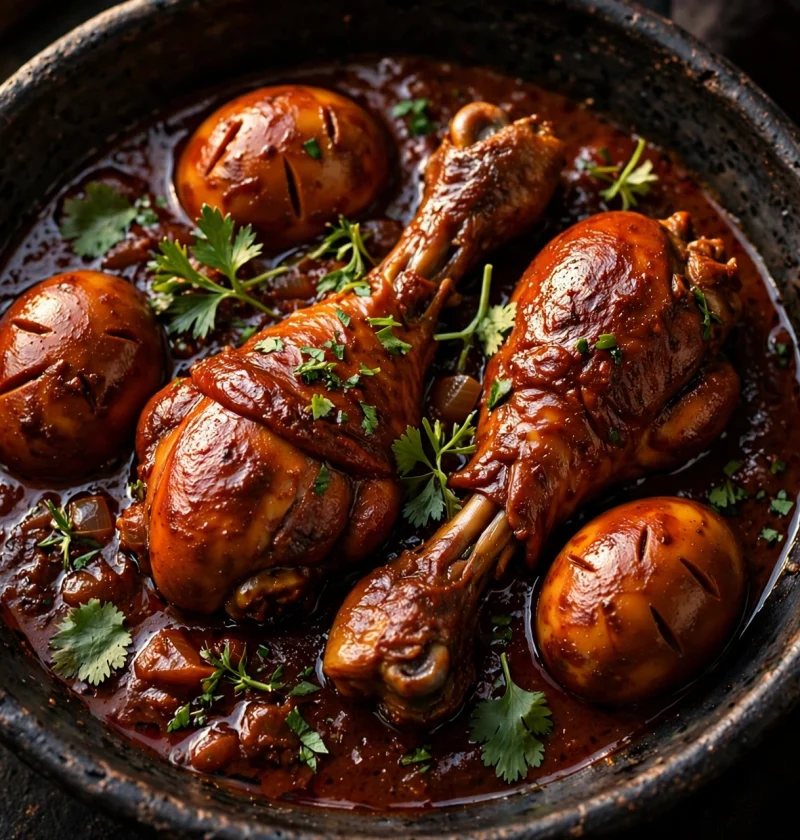
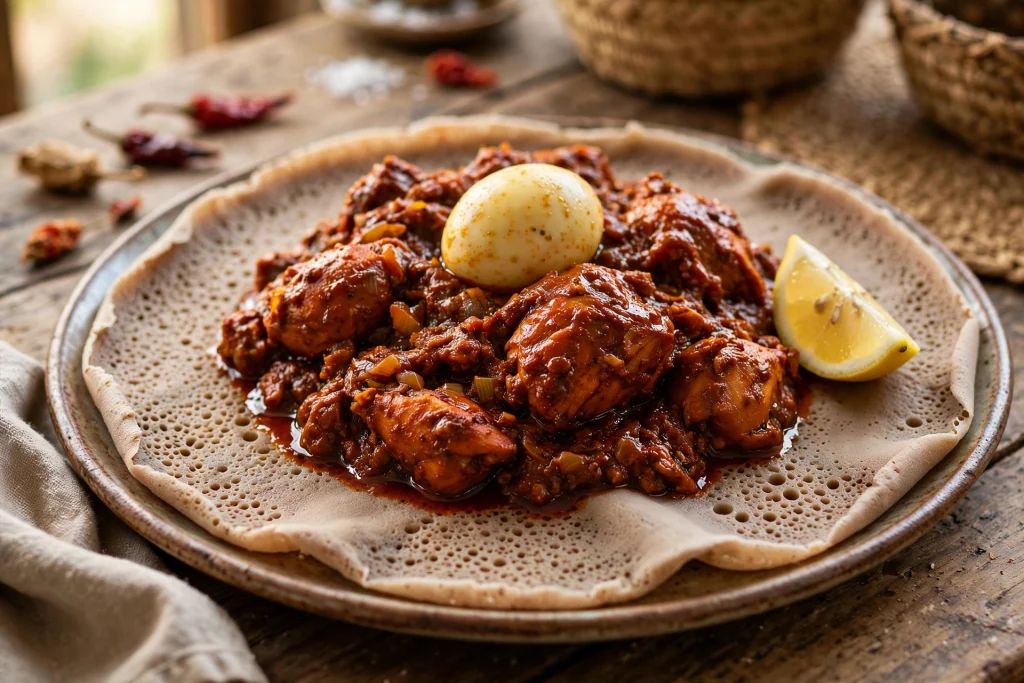
Some dishes are just dinner. This doro wat chicken is a national treasure. In Ethiopia, doro wat — “doro” means chicken, “wat” (also spelled wot) means stew — is the national dish, the centerpiece of holidays, weddings, and Sunday family gatherings. Picture this: bone-in chicken braised until impossibly tender in a deep red-brown sauce built from a mountain of slowly caramelized red onions, fiery berbere spice, and niter kibbeh (Ethiopian spiced butter), with whole hard-boiled eggs that soak up all that glorious sauce. It looks dramatic, tastes even better, and it’s completely doable at home.
Doro Wat Chicken (Ethiopian Chicken Stew)
Ingredients
Equipment
Method
- Make the Berbere and Niter Kibbeh (do ahead if you like) — Whisk all the berbere spices together in a small bowl and funnel into a jar — done. For the niter kibbeh, melt the butter in a small saucepan over medium-low heat. Stir in the garlic, ginger, fenugreek, cardamom, turmeric, cinnamon stick, cloves, and salt; simmer gently for 5 minutes until fragrant and the milk solids turn lightly golden. Strain through a fine-mesh sieve into a jar, discarding the solids. Both keep beautifully — berbere for months in the pantry, niter kibbeh for 2 weeks in the fridge. Hard-boil the eggs now too, if you haven’t already.
- Prep the Chicken — Rub the chicken pieces all over with the lemon juice and 1 teaspoon salt — this is the traditional Ethiopian step that freshens the chicken and helps the sauce cling. Set aside at room temperature while you start the onions (no longer than 30 minutes).
- Cook the Onions Dry — the Heart of Doro Wat — Place the finely chopped red onions in a large, dry Dutch oven over medium heat — no oil, no butter yet. This is the authentic technique: stir frequently as the onions release their water, then keep cooking, stirring every few minutes, for 25–30 minutes until the water fully evaporates and the onions collapse into a soft, sweet, deeply golden paste. Don’t rush this — the long onion cook is what gives doro wat its signature body and sweetness. If they start to stick, add a splash of water, not oil.
- Bloom the Spices — Stir the niter kibbeh into the onion paste until melted. Add the minced ginger and garlic and cook 1 minute until fragrant. Sprinkle in the berbere spice blend and stir constantly for 1 minute — toasting the spices in the spiced butter wakes up their flavor. Stir in the tomato paste and cook 2 more minutes until it darkens slightly.
- Braise the Chicken — Add the chicken pieces to the pot along with the chicken broth and red wine (if using). The liquid should come about halfway up the chicken — add a splash more broth if needed. Bring to a gentle simmer, then cover, reduce the heat to low, and braise for 40–45 minutes, turning the chicken once halfway through, until the meat is fall-off-the-bone tender and nearly pulling away from the bone.
- Add the Eggs and Finish — Using a small sharp knife, make 2–3 shallow slits in each peeled hard-boiled egg — this lets the sauce seep inside. Nestle the eggs into the stew, spooning sauce over them. Simmer uncovered for 10 minutes more, until the sauce thickens to a rich, glossy consistency that coats the chicken (a little oil glistening on the surface is traditional and correct). Taste and adjust salt. Rest 10 minutes off the heat, then serve.
Notes
What makes this recipe different from the others you’ll find online: I’m giving you the two things most recipes skip — a from-scratch DIY berbere spice blend (so you’re not hunting down a specialty jar) and a complete injera substitute guide, because most of us can’t find authentic injera bread at the corner store. No specialty shopping required. Just onions, chicken, spices, and a little patience.
Why You’ll Love This Doro Wat Chicken
- Ethiopia’s national dish, made accessible — all the deep, complex flavor with pantry spices and a homemade berbere blend.
- The onion technique is a revelation — cooking a huge pile of red onions down with no oil first creates a jammy, sweet-savory base you can’t get any other way.
- One-pot comfort — everything braises together in a Dutch oven; the eggs go in at the end and drink up the sauce.
- Better the next day — like all great stews, the flavors meld and deepen overnight.
- Naturally gluten-free (with injera substitutes) and dairy-optional — big flavor without cream or flour.
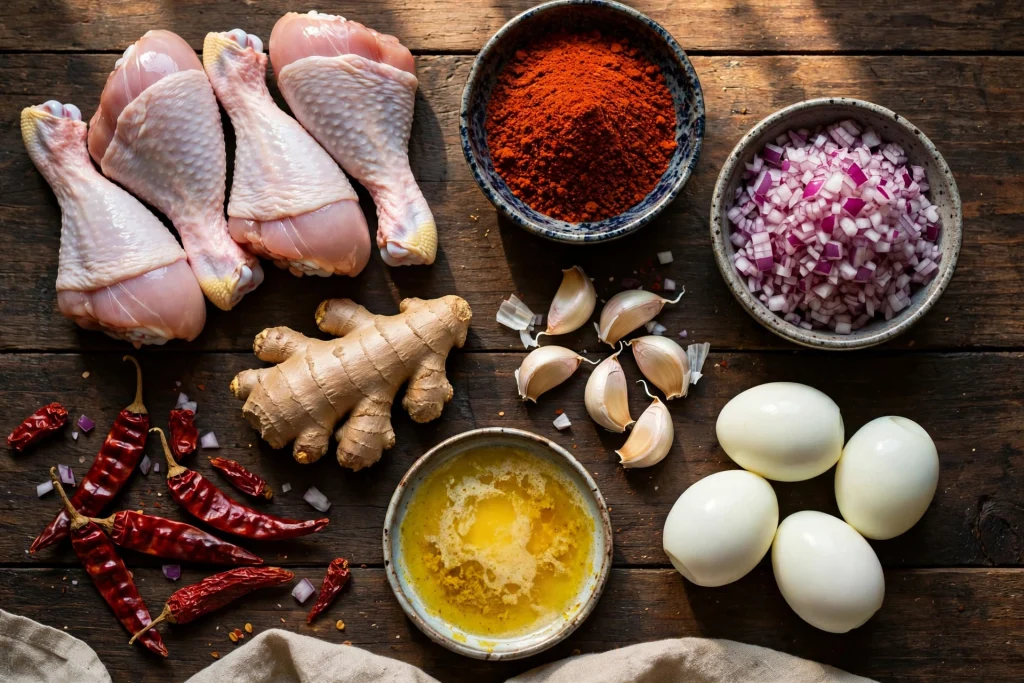
Doro Wat Chicken Ingredients
For the DIY Berbere Spice Blend (makes ~½ cup — 3 tbsp for this recipe)
- 3 tablespoons sweet paprika
- 2 tablespoons cayenne pepper (use 1 tablespoon for milder heat)
- 2 teaspoons ground fenugreek
- 2 teaspoons ground coriander
- 1 teaspoon ground cumin
- 1 teaspoon ground ginger
- 1 teaspoon ground turmeric
- 1 teaspoon ground black pepper
- 1 teaspoon ground cinnamon
- 1 teaspoon ground cardamom
- ½ teaspoon ground cloves
- ½ teaspoon ground allspice
- ½ teaspoon ground nutmeg
- 1 teaspoon fine sea salt
For the Quick Niter Kibbeh (makes ~½ cup — 6 tbsp needed; keeps 2 weeks in fridge)
- ½ cup (1 stick) unsalted butter
- 2 cloves garlic, minced
- 1 (1-inch) piece fresh ginger, thinly sliced
- ½ teaspoon ground fenugreek
- ½ teaspoon ground cardamom
- ¼ teaspoon ground turmeric
- 1 small cinnamon stick
- 2 whole cloves
- Pinch of salt
For the Doro Wat
- 3 lbs (1.4 kg) bone-in, skinless chicken drumsticks (about 8–10 pieces) — or bone-in thighs, or a whole cut-up chicken
- 2 tablespoons lemon juice
- 1 teaspoon salt, plus more to taste
- 4 large red onions, very finely chopped (about 8 cups — a food processor is your friend here)
- 6 tablespoons niter kibbeh (from above; or plain ghee in a pinch)
- 3 tablespoons berbere spice blend (from above; or store-bought)
- 2 tablespoons tomato paste
- 1 tablespoon minced fresh ginger
- 1 tablespoon minced garlic (about 4 cloves)
- 1 cup low-sodium chicken broth or water
- ¼ cup dry red wine (optional but traditional)
- 6 large eggs, hard-boiled and peeled
How to Make Doro Wat Chicken
Step 1: Make the Berbere and Niter Kibbeh (do ahead if you like)
Whisk all the berbere spices together in a small bowl and funnel into a jar — done. For the niter kibbeh, melt the butter in a small saucepan over medium-low heat. Stir in the garlic, ginger, fenugreek, cardamom, turmeric, cinnamon stick, cloves, and salt; simmer gently for 5 minutes until fragrant and the milk solids turn lightly golden. Strain through a fine-mesh sieve into a jar, discarding the solids. Both keep beautifully — berbere for months in the pantry, niter kibbeh for 2 weeks in the fridge. Hard-boil the eggs now too, if you haven’t already.
Step 2: Prep the Chicken
Rub the chicken pieces all over with the lemon juice and 1 teaspoon salt — this is the traditional Ethiopian step that freshens the chicken and helps the sauce cling. Set aside at room temperature while you start the onions (no longer than 30 minutes).
Step 3: Cook the Onions Dry — the Heart of Doro Wat
Place the finely chopped red onions in a large, dry Dutch oven over medium heat — no oil, no butter yet. This is the authentic technique: stir frequently as the onions release their water, then keep cooking, stirring every few minutes, for 25–30 minutes until the water fully evaporates and the onions collapse into a soft, sweet, deeply golden paste. Don’t rush this — the long onion cook is what gives doro wat its signature body and sweetness. If they start to stick, add a splash of water, not oil.
Step 4: Bloom the Spices
Stir the niter kibbeh into the onion paste until melted. Add the minced ginger and garlic and cook 1 minute until fragrant. Sprinkle in the berbere spice blend and stir constantly for 1 minute — toasting the spices in the spiced butter wakes up their flavor. Stir in the tomato paste and cook 2 more minutes until it darkens slightly.
Step 5: Braise the Chicken
Add the chicken pieces to the pot along with the chicken broth and red wine (if using). The liquid should come about halfway up the chicken — add a splash more broth if needed. Bring to a gentle simmer, then cover, reduce the heat to low, and braise for 40–45 minutes, turning the chicken once halfway through, until the meat is fall-off-the-bone tender and nearly pulling away from the bone.
Step 6: Add the Eggs and Finish
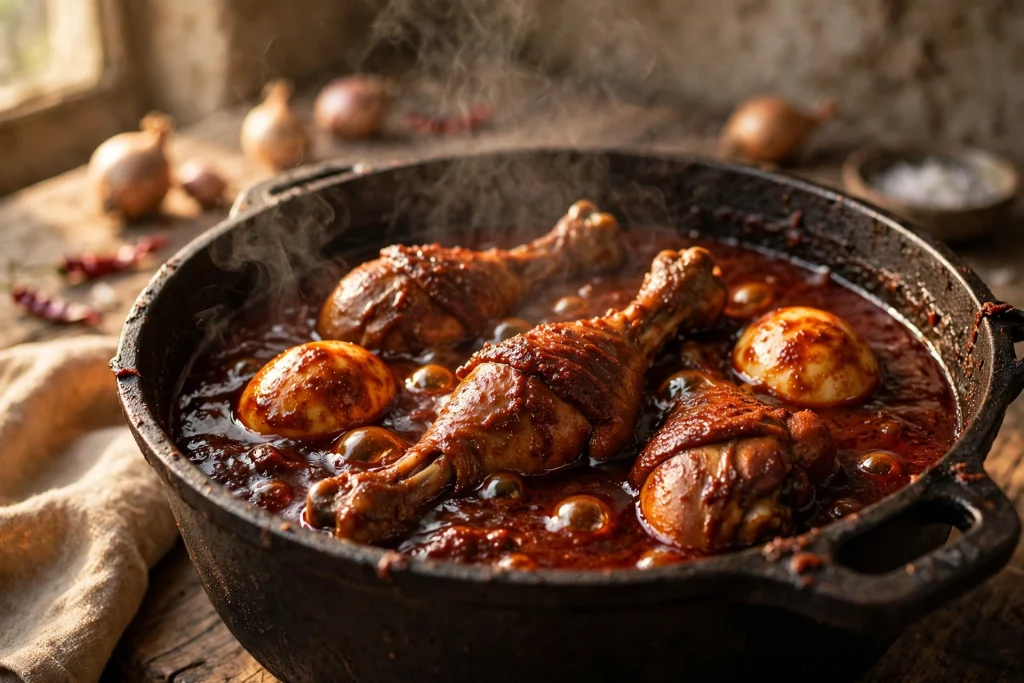
Using a small sharp knife, make 2–3 shallow slits in each peeled hard-boiled egg — this lets the sauce seep inside. Nestle the eggs into the stew, spooning sauce over them. Simmer uncovered for 10 minutes more, until the sauce thickens to a rich, glossy consistency that coats the chicken (a little oil glistening on the surface is traditional and correct). Taste and adjust salt. Rest 10 minutes off the heat, then serve.
Tips for the Best Doro Wat
- Don’t shortcut the onions. The 25–30 minute dry cookdown is the single most important step. Undercooked onions = thin, sharp-tasting sauce.
- Chop the onions truly fine. A food processor makes this painless — big chunks won’t melt into the sauce properly.
- Control the heat through the berbere. Berbere blends vary wildly in heat. If you’re heat-sensitive, use 2 tablespoons of the blend instead of 3, or cut the cayenne in the DIY mix to 1 tablespoon.
- Bone-in chicken is non-negotiable for authentic flavor. The bones enrich the sauce as it braises. Boneless thighs work in a pinch but cook them 10 minutes less.
- Slit the eggs. Those little cuts are how the eggs absorb the berbere sauce — the stained, flavor-soaked eggs are the best part for many people.
- Make it a day ahead. Doro wat is famously better the next day. Cool, refrigerate, and reheat gently — the sauce thickens and the flavors marry.
- Wine is optional but traditional. A splash of dry red wine (theg) adds depth; skip it and use broth if you prefer.
What to Serve with Doro Wat (Injera Substitute Guide)
In Ethiopia, doro wat is served on injera — a spongy, tangy, fermented teff flatbread that doubles as plate, utensil, and side dish. Real injera needs teff flour and 2–3 days of fermentation, which most of us can’t manage on a weeknight. Here’s how to get close:
- 15-Minute Quick Injera-Style Flatbread (best substitute): Whisk 1 cup all-purpose flour, ½ cup teff flour (optional — use all AP flour if you can’t find it), 1 cup water, ½ cup plain yogurt, ½ teaspoon baking soda, and ½ teaspoon salt. Rest 15 minutes. Ladle ¼-cup portions onto a hot nonstick skillet like thin pancakes, cooking 1–2 minutes per side until set with a few bubbles. Soft, foldable, and perfect for scooping.
- Store-bought shortcuts: Flour tortillas, naan, or pita all work — warm them first so they’re pliable. Thin sourdough crepes are another good stand-in for injera’s tang.
- Rice: Fluffy basmati rice is the simplest base and soaks up the sauce beautifully.
- Round out the plate: A simple chopped salad with lemon dressing, sautéed collard greens with garlic and ginger (in the spirit of gomen), or a scoop of red lentils. A dollop of plain yogurt on the side cools the berbere heat.
Storage and Reheating
- Refrigerator: Store in an airtight container for up to 4 days. The stew thickens and the flavor deepens — it’s genuinely better on day two.
- Freezer: Freezes well for up to 3 months. Freeze the chicken and sauce together (the eggs can turn rubbery when frozen, so add freshly boiled eggs when reheating if you’re particular).
- Reheating: Warm gently on the stovetop over low heat, adding a splash of broth or water if the sauce is too thick. Stir the eggs in carefully so they don’t break apart.
Doro Wat FAQs
What exactly is doro wat? Doro wat is Ethiopia’s national dish — a rich chicken stew (“doro” = chicken, “wat”/”wot” = stew in Amharic). It’s the centerpiece of Ethiopian holidays, weddings, and family celebrations, traditionally served communally on a large platter of injera bread. Its defining features are the long-cooked red onion base, fiery berbere spice, niter kibbeh spiced butter, and whole hard-boiled eggs simmered in the sauce.
Is doro wat very spicy? It has real, warming heat — berbere is a boldly spiced blend, not a shy one. That said, you control it: use 2 tablespoons of berbere instead of 3, or reduce the cayenne in the DIY blend. The long onion cook and the eggs mellow the heat considerably, and a dollop of yogurt on the side helps too.
What can I use instead of injera bread? The quick 15-minute injera-style flatbread in the “What to Serve” section is the closest easy option. Otherwise, warm flour tortillas, naan, or pita work well, and basmati rice is the simplest base of all. Authentic injera requires teff flour and days of fermentation — delicious, but a project for another weekend.
What is niter kibbeh, and can I just use regular butter? Niter kibbeh is Ethiopian spiced clarified butter, simmered with garlic, ginger, fenugreek, cardamom, and other warm spices — it’s one of doro wat’s signature flavors. The 5-minute quick version in this recipe gets you 90% of the way there. In a real pinch, plain ghee or butter works, but try the quick version at least once — it makes a noticeable difference.
Can I make doro wat ahead of time? Absolutely — you should. It keeps 4 days refrigerated and freezes well for 3 months. The sauce thickens and the flavors meld overnight, so it’s an ideal make-ahead dish for entertaining. Reheat gently on the stovetop with a splash of broth.
More Chicken Recipes You’ll Love
If this bold, slow-braised doro wat won you over, you’ll love these other big-flavor chicken recipes from The Spice Diary:
- Slow Cooker Chicken Curry — set-it-and-forget-it comfort: tender chicken simmered low and slow in a rich, aromatic curry.
- Classic Chicken Curry — the weeknight-friendly stovetop version with a silky onion-tomato gravy.
- Instant Pot Chicken Vindaloo — for fellow heat-seekers: tangy, fiery, and ready fast under pressure.