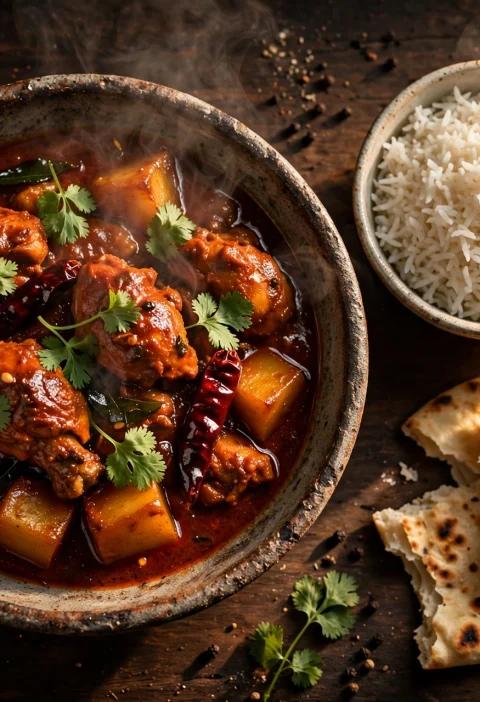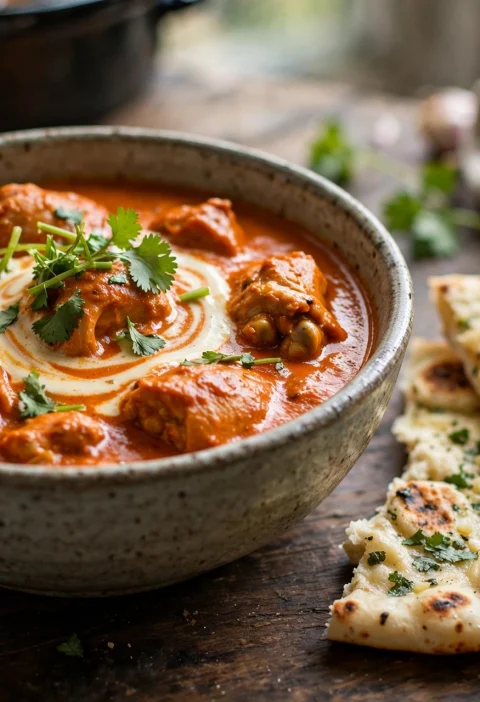
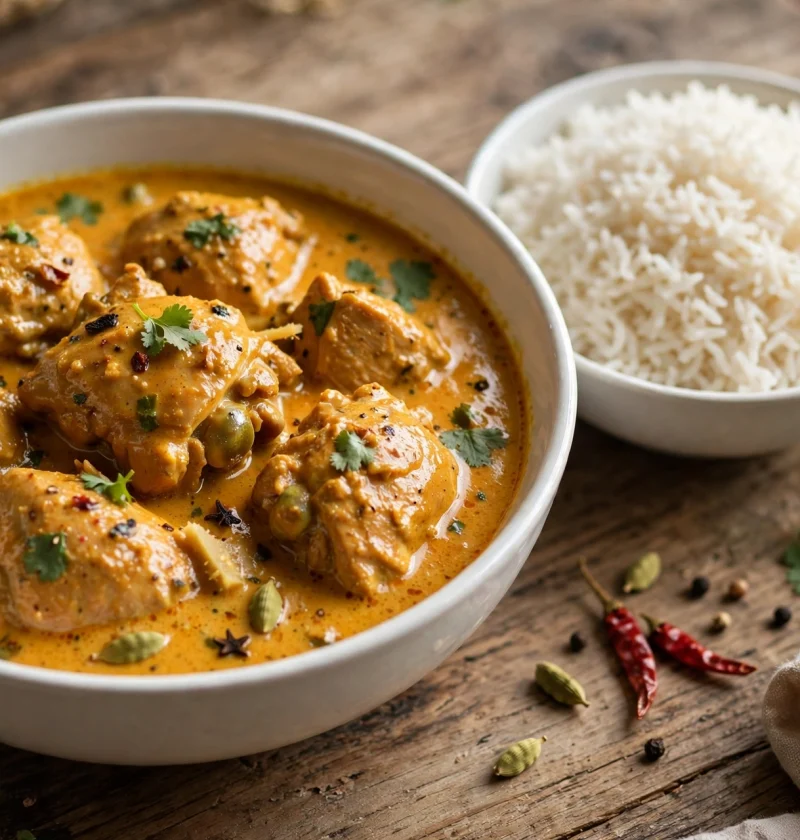
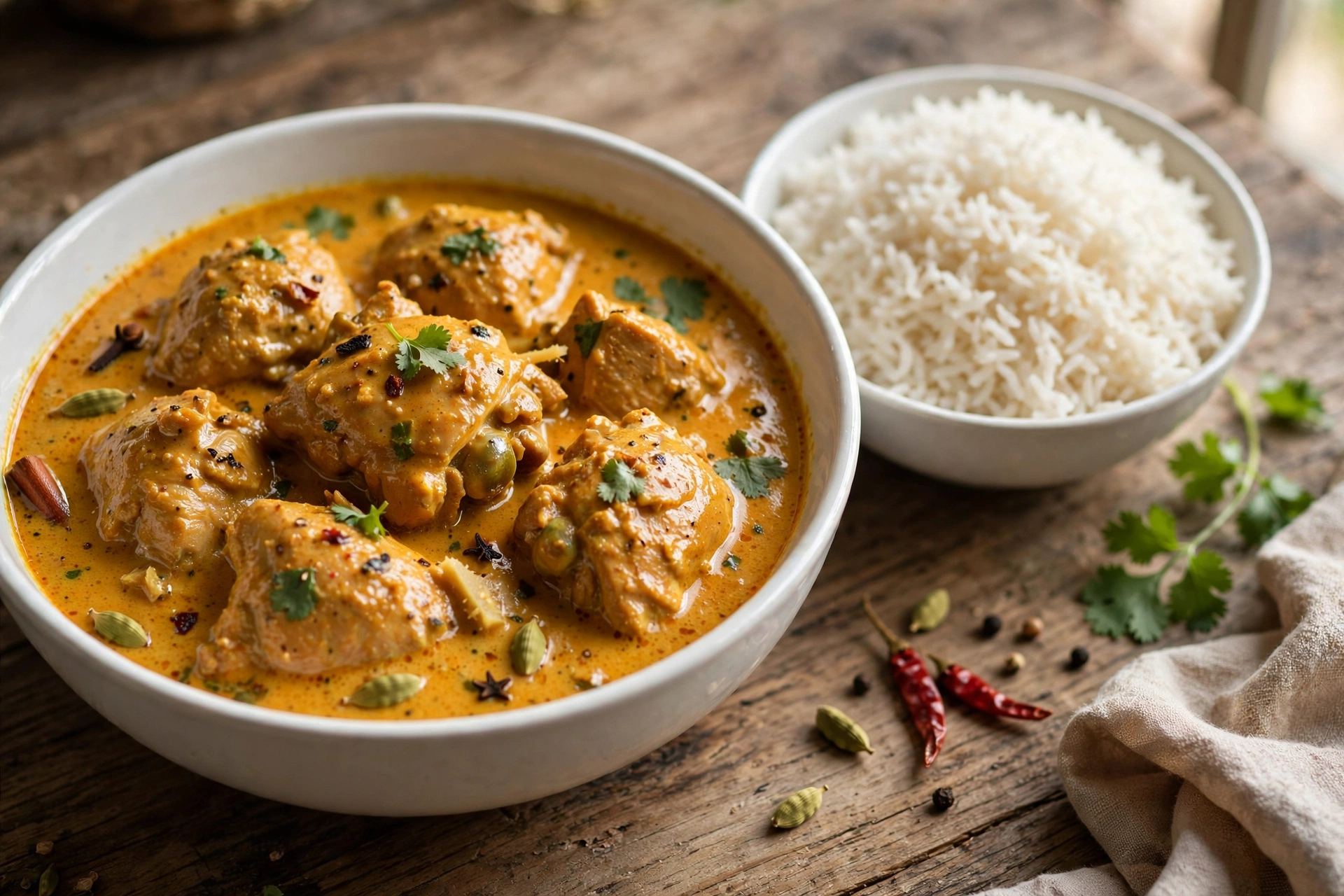
This slow cooker chicken curry is the answer to the busiest weeknight question: can I just throw everything in the crockpot and come home to dinner? Yes — you absolutely can. Tender chicken thighs, creamy coconut milk, tomato paste, and warm Indian spices slow-cook into a rich, fragrant curry while you’re at work, at school pickup, or anywhere else. No browning, no sautéing, no standing over the stove. If you love our classic chicken curry recipe but wish it cooked itself, this is your companion recipe.
Why You’ll Love This Slow Cooker Chicken Curry
- True dump-and-go — everything goes into the slow cooker raw. Stir once at the end. That’s it.
- Food-safety sorted — includes exact guidance on why raw chicken is perfectly safe in a slow cooker (and the one mistake to avoid).
- Deep, rich flavor — low, slow cooking blooms the spices the way simmering never quite does.
- Versatile — with coconut milk or without, with potatoes or without, chicken thighs or breasts.
- Meal-prep gold — tastes even better the next day; freezes like a dream.
Slow Cooker Chicken Curry Ingredients
For the Curry
- 2 lbs (900g) boneless, skinless chicken thighs, cut into 1½-inch pieces (breasts work too — see tips)
- 1 can (14 oz / 400ml) full-fat coconut milk, shaken well
- 1 large onion, finely chopped
- 4 cloves garlic, minced
- 1 tablespoon fresh ginger, grated
- 2 tablespoons tomato paste
- 2 tablespoons mild curry powder
- 1½ teaspoons garam masala
- 1 teaspoon ground cumin
- ½ teaspoon ground turmeric
- ½–1 teaspoon Kashmiri red chili powder (adjust to your heat level)
- 1½ teaspoons salt, or to taste
- 1 tablespoon lemon juice
For the Thickened Finish
- 2 tablespoons cornstarch mixed with 3 tablespoons cold water (optional, for a thicker sauce)
- 2 tablespoons unsalted butter (or ghee), for richness
- ¼ cup fresh cilantro, chopped, plus more for garnish
- 2 tablespoons mango chutney (optional but lovely — adds a sweet-tart restaurant depth)
Optional: With Potatoes
- 1 lb (450g) baby potatoes, halved (or 2 medium russet potatoes, cut into 1-inch chunks)
How to Make Slow Cooker Chicken Curry
Step 1: Add Everything to the Slow Cooker
Place the raw chicken pieces directly into the slow cooker — yes, raw is fine (see the safety note below). Add the coconut milk, chopped onion, garlic, ginger, tomato paste, curry powder, garam masala, cumin, turmeric, chili powder, salt, and lemon juice. If using potatoes, add them now too. Stir everything together so the chicken is coated and the spices are evenly distributed.
Step 2: Cook Low and Slow
Cover and cook on LOW for 6–7 hours or HIGH for 3–4 hours. The chicken is done when it’s fall-apart tender and registers at least 165°F (74°C) on an instant-read thermometer. Do not open the lid during the first 2 hours on HIGH (or first 3 hours on LOW) — lifting the lid releases heat and extends cooking time.
Step 3: Shred or Keep Chunky
Once cooked, use two forks to lightly shred a few pieces right in the pot, or leave the chunks whole — your call. Stir the curry well. The sauce will look a little thin at this point; that’s normal for slow cookers, since the sealed lid traps all moisture.
Step 4: Thicken and Finish (Optional but Recommended)
Stir in the cornstarch slurry (cornstarch whisked with cold water) and cook on HIGH, uncovered, for 15–20 minutes until the sauce thickens to your liking. Stir in the butter and mango chutney (if using) and let them melt into the sauce. Taste and adjust salt.
Step 5: Garnish and Serve
Spoon the curry into bowls over fluffy basmati rice or with warm naan. Shower with fresh cilantro. Serve immediately.
The Dump-and-Go Curry Paste Version
On nights when you can’t even chop an onion, use this shortcut: replace the onion, garlic, ginger, tomato paste, curry powder, garam masala, cumin, turmeric, and chili powder with 3–4 tablespoons of red curry paste or a good-quality Indian curry paste. Everything else stays the same — coconut milk, raw chicken, salt, lemon juice — and you still get a deeply flavored curry with almost zero prep.
Can You Put Raw Chicken in a Slow Cooker? (Food-Safety Guide)
This is the #1 question people ask about slow cooker chicken curry, and the answer is yes — it’s completely safe, as long as you follow two rules:
- Cook long enough to reach 165°F (74°C). Chicken must reach this internal temperature to be safe. On LOW, 6–7 hours easily gets there; on HIGH, 3–4 hours. Use a thermometer the first few times until you know your slow cooker.
- Don’t leave raw chicken sitting at room temperature. Put it straight from the fridge into the slow cooker, then start cooking immediately. Don’t assemble the crockpot in the morning, leave it on the counter all day, and start it at noon.
The danger zone for bacteria is 40°F–140°F (4°C–60°C) — food should not sit in that range for more than 2 hours. A slow cooker on LOW reaches safe temperatures within about 2 hours, and the chicken then cooks for hours past that. This is the same principle food-safety agencies have confirmed for years: raw meat in a properly used slow cooker is safe. Frozen chicken is the one exception to avoid — always thaw it first, because frozen chicken can spend too long in the danger zone.
Tips for the Best Slow Cooker Chicken Curry
- Thighs beat breasts. Chicken thighs stay juicy over 7 hours; breasts can dry out. If you only have breasts, reduce cook time by 30–45 minutes.
- Don’t add the coconut milk twice. One can is enough — the sealed lid keeps all liquid in. Adding extra makes a thin, soupy curry.
- Toast your spices if you have 2 minutes. Blooming the curry powder, garam masala, and cumin in a teaspoon of hot oil before adding deepens the flavor noticeably. Totally optional on dump-and-go nights.
- Full-fat coconut milk only. Light coconut milk gives a watery sauce. Shake the can well — the cream at the top is gold.
- Don’t over-thicken. The cornstarch slurry is optional; many people love the curry as-is with the natural starch from the potatoes.
- With or without coconut milk? The coconut-milk version is creamy and mildly sweet (closer to a Kerala-style curry). For a without-coconut-milk version, replace the can with 1 cup of chicken stock plus ½ cup plain yogurt stirred in at the very end (off heat, so it doesn’t split).
- Mango chutney is the sleeper hit. A spoonful stirred in at the end adds the sweet-tart balance restaurants get from hours of simmering.
What to Serve with Slow Cooker Chicken Curry
Ladle it over fluffy basmati rice or serve it with warm naan for scooping up every drop of sauce. A side of cucumber raita cools the heat, and a simple kachumber salad adds crunch. If you want to go full comfort-food, serve it over baked potatoes — the curry sauce seeps into everything.
Storage and Reheating
- Refrigerator: Store in an airtight container for up to 4 days. The flavors deepen overnight — many say day two is even better.
- Freezer: Freezes beautifully for up to 3 months. Cool completely, then freeze in portions. Thaw overnight in the fridge before reheating.
- Reheating: Warm gently on the stovetop or in the microwave. Add a splash of coconut milk or water if the sauce thickened in the fridge.
Slow Cooker Chicken Curry FAQs
Can I put raw chicken in a slow cooker?
Yes — it’s completely safe as long as the chicken reaches 165°F (74°C) internal temperature during cooking. Add it straight from the fridge to the slow cooker and start cooking immediately. Avoid frozen chicken, which can linger in the bacterial danger zone too long.
How long should chicken curry cook in a slow cooker?
Cook on LOW for 6–7 hours or HIGH for 3–4 hours. Chicken thighs are forgiving; if you’ll be out longer, LOW is the safer setting. The curry is done when the chicken is tender and reads 165°F (74°C) on a thermometer.
Can I make slow cooker chicken curry without coconut milk?
Absolutely. Replace the coconut milk with 1 cup chicken stock and stir in ½ cup plain whole-milk yogurt at the very end (with the heat off, to prevent curdling). The result is tangier and more North-Indian in style.
Should I brown the chicken first?
No need — that’s the beauty of this recipe. Browning adds a little depth but costs time and dishes. The long, slow cook develops plenty of flavor from the bloomed spices alone.
Why is my slow cooker chicken curry watery?
Slow cookers trap all moisture, so sauces come out thinner than stovetop versions. Fix it by stirring in a cornstarch slurry (2 tablespoons cornstarch + 3 tablespoons cold water) and cooking on HIGH, uncovered, for 15–20 minutes. Adding potatoes also helps — their starch naturally thickens the sauce.
How is this different from your regular chicken curry?
Our classic chicken curry recipe
Slow Cooker Chicken Curry
Ingredients
Equipment
Method
- Step 1: Add Everything to the Slow Cooker — Place the raw chicken pieces directly into the slow cooker — yes, raw is fine (see the safety note below). Add the coconut milk, chopped onion, garlic, ginger, tomato paste, curry powder, garam masala, cumin, turmeric, chili powder, salt, and lemon juice. If using potatoes, add them now too. Stir everything together so the chicken is coated and the spices are evenly distributed.
- Step 2: Cook Low and Slow — Cover and cook on LOW for 6–7 hours or HIGH for 3–4 hours. The chicken is done when it’s fall-apart tender and registers at least 165°F (74°C) on an instant-read thermometer. Do not open the lid during the first 2 hours on HIGH (or first 3 hours on LOW) — lifting the lid releases heat and extends cooking time.
- Step 3: Shred or Keep Chunky — Once cooked, use two forks to lightly shred a few pieces right in the pot, or leave the chunks whole — your call. Stir the curry well. The sauce will look a little thin at this point; that’s normal for slow cookers, since the sealed lid traps all moisture.
- Step 4: Thicken and Finish — Stir in the cornstarch slurry (cornstarch whisked with cold water) and cook on HIGH, uncovered, for 15–20 minutes until the sauce thickens to your liking. Stir in the butter and mango chutney (if using) and let them melt into the sauce. Taste and adjust salt.
- Step 5: Garnish and Serve — Spoon the curry into bowls over fluffy basmati rice or with warm naan. Shower with fresh cilantro. Serve immediately.
Notes