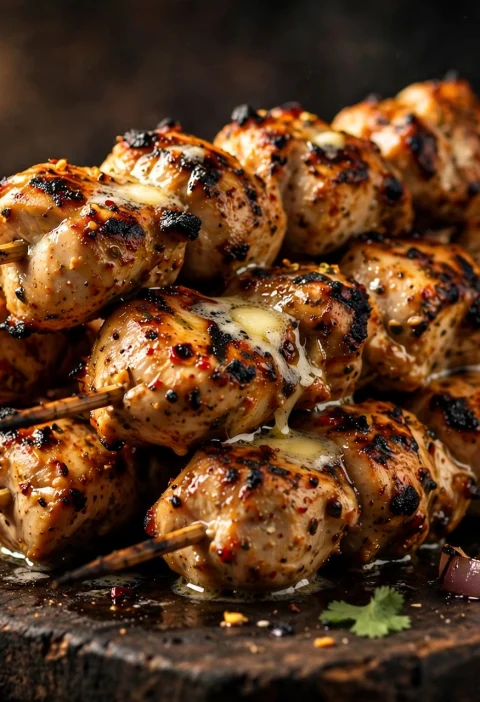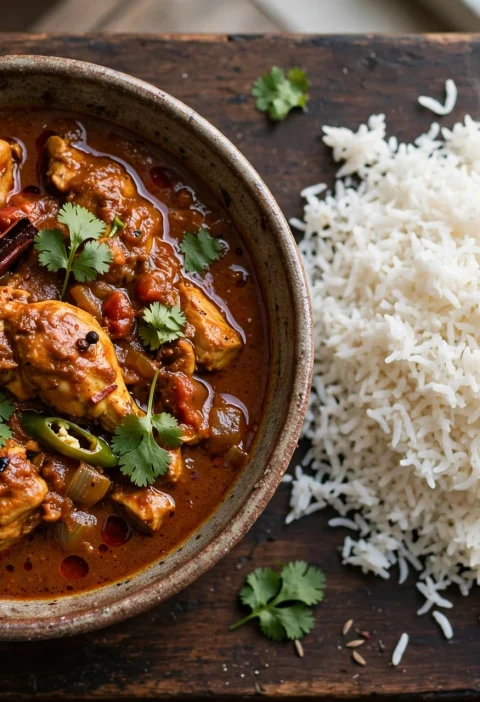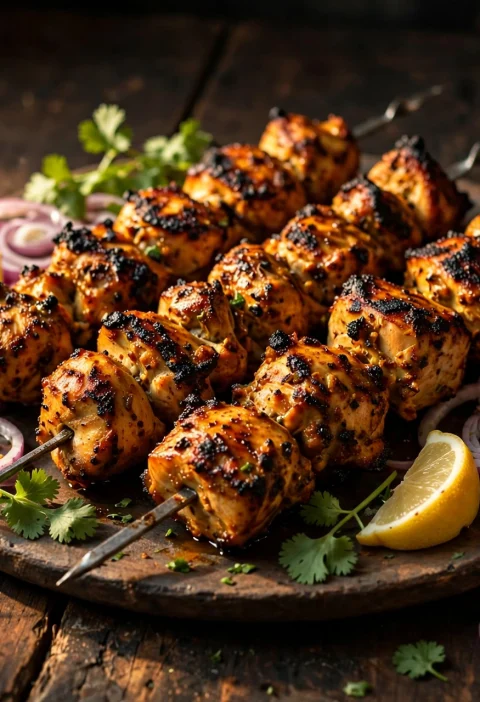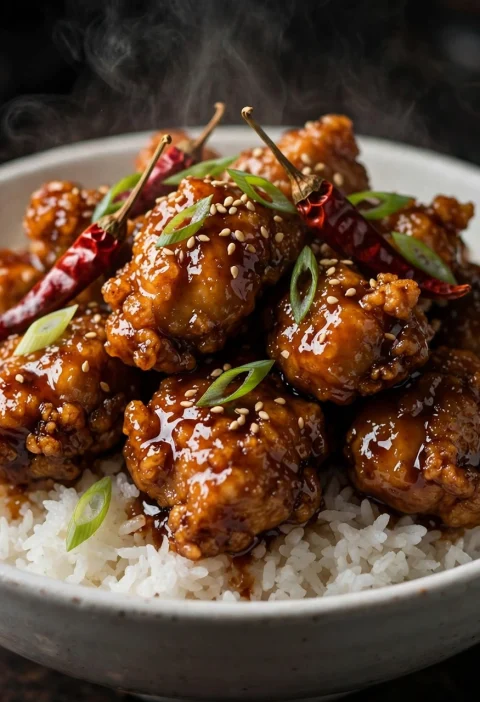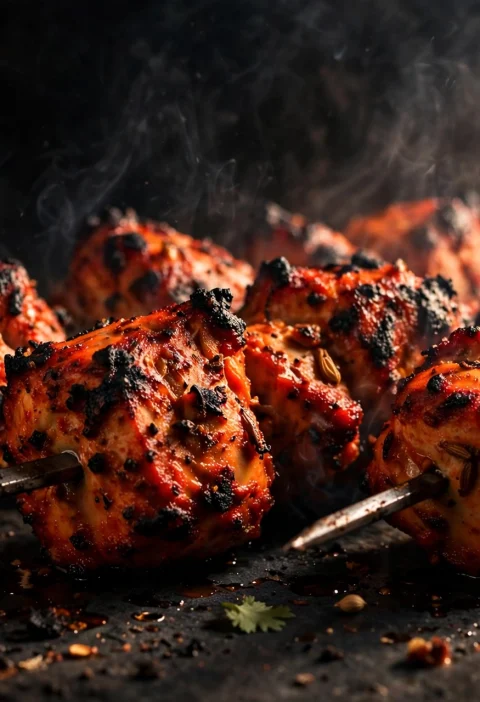
If you love bold, fiery South Indian flavors, this chicken ghee roast recipe is about to become your new obsession. Born in the legendary Kundapur kitchens of coastal Karnataka — made famous by Shetty lunch homes — this dish takes chicken marinated in yogurt and spices, then roasts it in generous spoonfuls of ghee with a fiery Byadgi chili masala paste, tamarind for tang, and curry leaves for aroma. The result is a deep-red, glossy, intensely flavored Manglorean chicken ghee roast that is spicy, tangy, buttery, and utterly addictive. This authentic homemade version is ready in about 50 minutes — no special equipment needed.
Why You’ll Love This Chicken Ghee Roast
- Fiery and unforgettable — Byadgi chilies give that signature deep-red color and smoky heat without burning your palate to a crisp.
- The ghee makes it — roasting the masala in real ghee creates a glossy, rich coating that no oil-based curry can match.
- Restaurant legend at home — the Shetty lunch home style ghee roast, recreated with an easy two-step masala paste method.
- Weeknight friendly — one pan, about 50 minutes, and most spices are pantry staples.
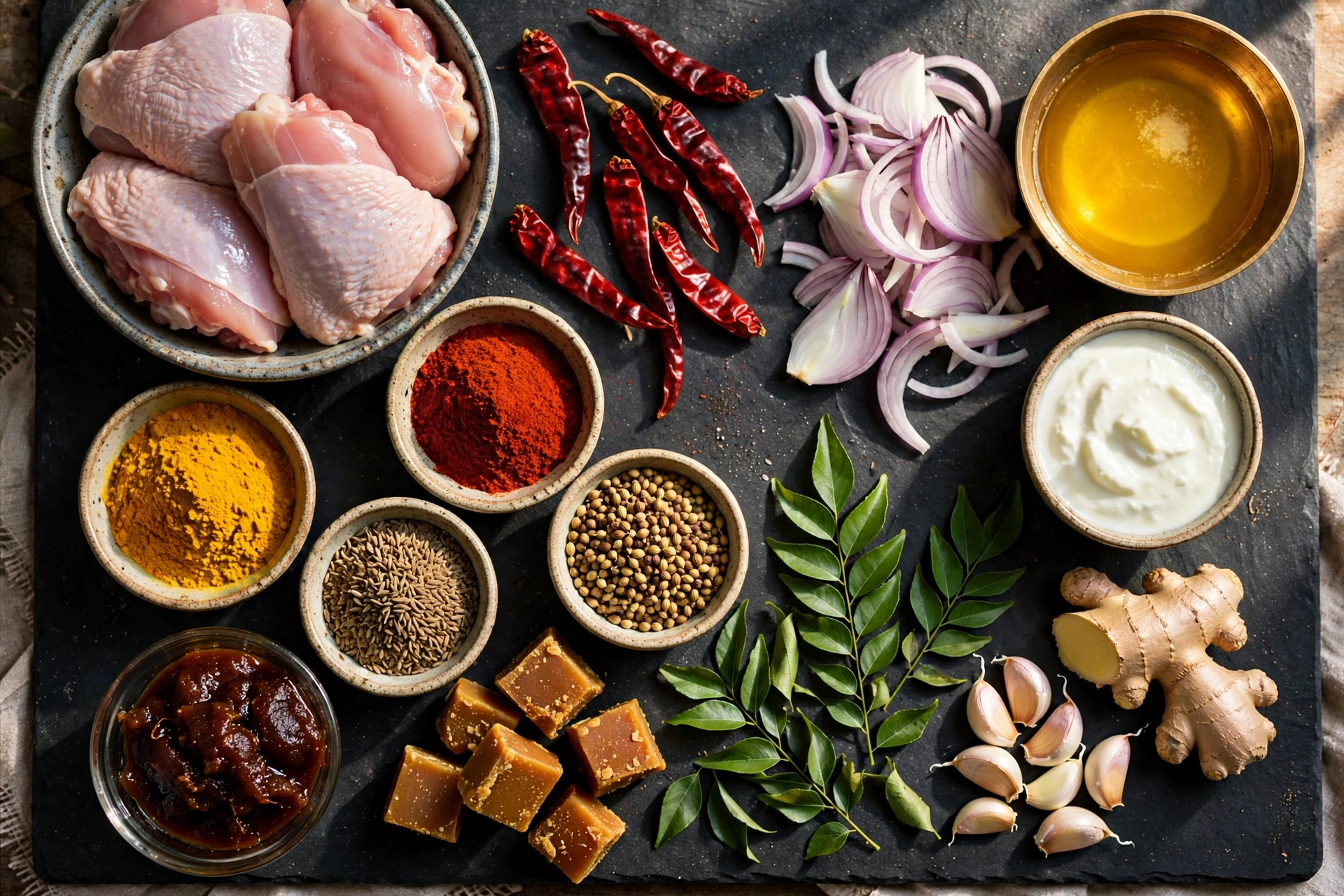
Chicken Ghee Roast Ingredients
For the Chicken Marinade
- 1½ lbs (700g) boneless, skinless chicken thighs, cut into 1½-inch pieces (breasts work, but thighs stay juicier in the dry roast)
- ½ cup plain whole-milk yogurt
- 1 tablespoon ginger garlic paste
- 1 tablespoon lemon juice
- 1 teaspoon turmeric powder
- 1 teaspoon Kashmiri red chili powder
- 1 teaspoon salt
For the Ghee Roast Masala Paste
- 8–10 dried Byadgi chilies (deseeded for moderate heat; keep seeds for extra fire)
- 2 dried red chilies (round variety, optional — for extra heat)
- 1 teaspoon cumin seeds
- 1 teaspoon coriander seeds
- ½ teaspoon black peppercorns
- ½ teaspoon fenugreek (methi) seeds
- 4–5 garlic cloves
- 1-inch piece ginger, roughly chopped
- 1 tablespoon tamarind pulp (or a small lemon-sized ball of tamarind soaked in ¼ cup warm water, strained)
- 1 teaspoon jaggery (balances the heat and tamarind’s tang)
- 2–3 tablespoons water (for grinding)
For Roasting
- 4–5 tablespoons ghee (don’t skimp — ghee is the soul of this dish)
- 12–15 fresh curry leaves
- 1 large onion, finely sliced
- ½ teaspoon salt, or to taste
- Fresh coriander leaves, chopped (for garnish)
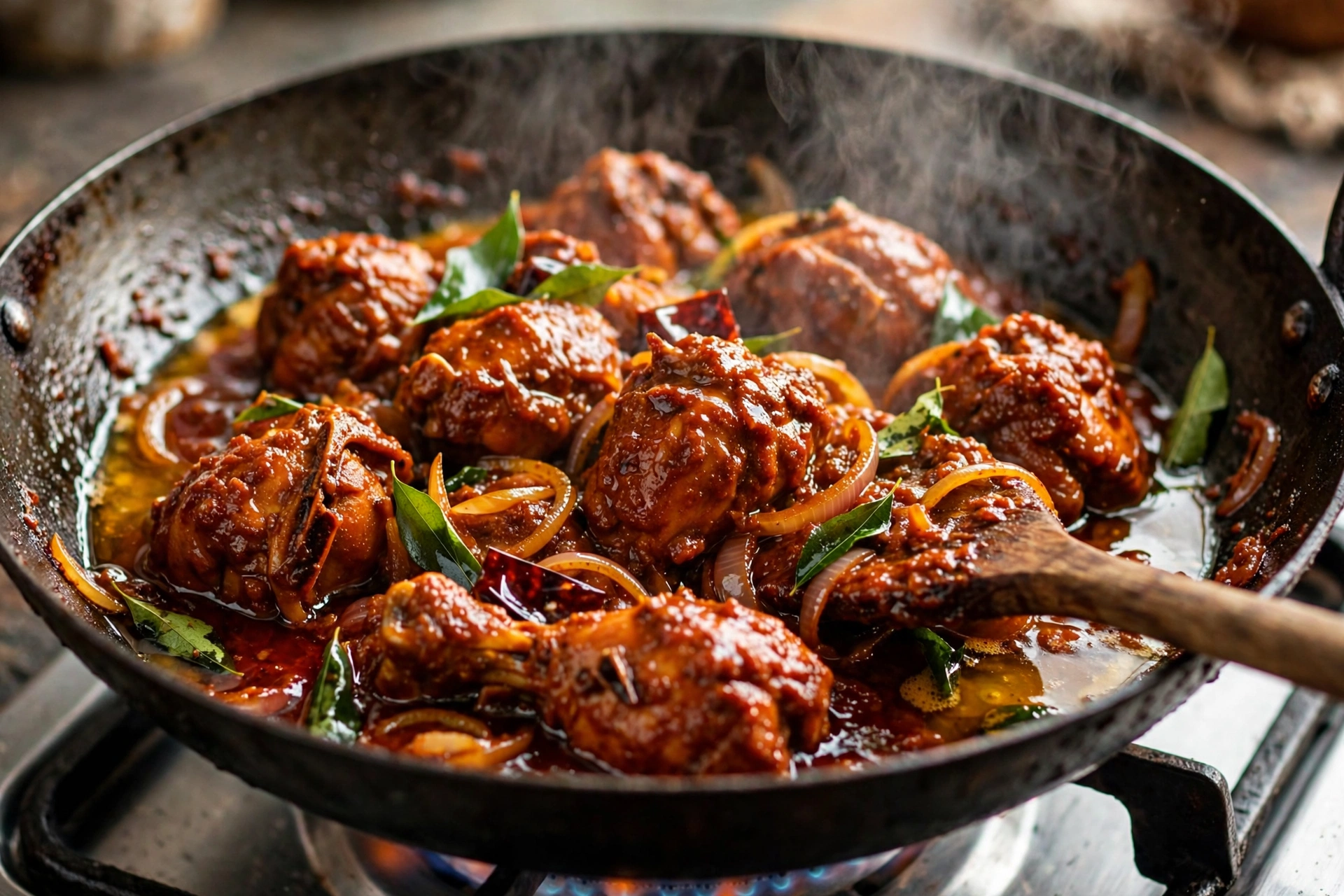
How to Make Chicken Ghee Roast
Step 1: Marinate the Chicken
In a large bowl, whisk together the yogurt, ginger garlic paste, lemon juice, turmeric, Kashmiri red chili powder, and salt. Add the chicken pieces and toss until every piece is well coated. Cover and refrigerate for at least 30 minutes, or up to 4 hours — the yogurt tenderizes the chicken and helps the spices cling.
Step 2: Toast the Spices
Heat a dry skillet over medium heat. Add the Byadgi chilies, dried red chilies, cumin seeds, coriander seeds, peppercorns, and fenugreek seeds. Toast for 2–3 minutes, stirring constantly, until the chilies darken slightly and the spices smell fragrant. Don’t let them burn — burnt spices turn bitter. Remove from heat and let cool for a minute.
Step 3: Grind the Ghee Roast Masala Paste
Transfer the toasted spices to a blender or wet grinder. Add the garlic, ginger, tamarind pulp, jaggery, and 2–3 tablespoons of water. Grind to a smooth, thick paste — this chicken ghee roast masala paste is the flavor base of the whole dish, so grind it fine. Scrape down the sides once or twice to catch every bit.
Step 4: Sear the Chicken
Heat 1 tablespoon of ghee in a large, heavy kadhai or skillet over medium-high heat. Add the marinated chicken in a single layer (shake off excess marinade) and sear for 3–4 minutes per side until golden with lightly charred edges. The chicken doesn’t need to cook through yet — it will finish in the masala. Remove and set aside.
Step 5: Roast the Masala in Ghee
Reduce the heat to medium-low. In the same pan, add the remaining 3–4 tablespoons of ghee. When it melts and shimmers, add the curry leaves (they’ll splutter) and the sliced onion. Sauté for 5–6 minutes until the onion is soft and golden. Now add the ground masala paste and cook for 6–8 minutes, stirring frequently, until the paste darkens, smells deeply roasted, and the ghee starts to separate and glisten at the edges — this roasting step is where the magic happens.
Step 6: Combine and Dry-Roast
Add the seared chicken pieces back to the pan along with any accumulated juices and the salt. Toss well so every piece is coated in the glossy red masala. Cook on medium heat for 10–12 minutes, stirring often, until the chicken is cooked through (165°F / 74°C internal temperature) and the masala clings thickly to the meat with almost no free gravy — a proper spicy ghee roast chicken is a dry roast, not a curry. Taste and adjust salt; add a pinch more jaggery if you want to round out the tang.
Step 7: Serve
Garnish with fresh coriander leaves and serve hot with neer dosa, appam, or steamed rice.
Tips for the Best Chicken Ghee Roast
- Byadgi chilies are non-negotiable for the authentic color. They give the dish its signature deep red without overwhelming heat. If you can’t find them, use Kashmiri dried chilies as a substitute — never regular hot red chilies alone, or the dish will be harsh.
- Deseed for control. Removing the seeds from the Byadgi chilies keeps the heat warm and flavorful rather than punishing. Keep the seeds in only if you truly love fire.
- Don’t skimp on the ghee. This is a ghee roast — 4–5 tablespoons is the real deal. Cutting it back to 1–2 gives you a decent curry, but not the glossy, restaurant-style shetty lunch home ghee roast.
- Roast the paste patiently. The masala paste needs a full 6–8 minutes in ghee until it darkens and the fat separates. Under-roasted masala tastes raw and flat; properly roasted, it tastes complex and smoky.
- Keep it dry. Unlike butter chicken or curry, chicken ghee roast should have almost no gravy — the thick masala should cling to each piece of chicken.
- Thighs beat breasts. Chicken thighs stay tender through the double cooking (sear + roast); breasts can dry out.

What to Serve with Chicken Ghee Roast
The classic pairing is chicken ghee roast with neer dosa — those delicate, lacy rice crepes from coastal Karnataka soak up the fiery masala perfectly. No neer dosa? Serve it with appam, dosa, or plain steamed rice. A cooling cucumber raita or a simple onion-lemon salad on the side is a smart move against the heat.
Storage and Reheating
- Refrigerator: Store in an airtight container for up to 4 days. The flavors deepen overnight — leftovers are arguably even better.
- Freezer: Freezes well for up to 3 months in a freezer-safe container. Thaw overnight in the fridge.
- Reheating: Warm in a skillet over medium-low heat with a teaspoon of ghee or a splash of water to loosen the masala. Avoid the microwave at full power — it can toughen the chicken.
Chicken Ghee Roast FAQs
What makes Mangalorean chicken ghee roast different from regular chicken curry?
Three things: it’s a dry roast (the thick masala clings to the chicken rather than swimming in gravy), it’s roasted in generous ghee, and the masala paste is built on Byadgi chilies, tamarind, and curry leaves — the signature trio of Kundapur cuisine.
Is chicken ghee roast very spicy?
It’s fiery but flavorful, not punishing. Byadgi chilies bring more color and smoky depth than raw heat. For a milder version, deseed all the chilies, reduce them to 6, and add a little extra jaggery to balance.
Can I make ghee roast with boneless chicken breast?
Yes, but use thighs if you can — they stay juicy through the sear-and-roast double cooking. If using breast, cut the pieces slightly larger and don’t overcook in the final roast.
What are Byadgi chilies, and what can I substitute?
Byadgi chilies are a dried red chili variety from Karnataka prized for their deep-red color, mild-to-medium heat, and slightly sweet, smoky flavor. The closest substitute is Kashmiri dried red chilies. Regular dried red chilies will make the dish much hotter and less colorful.
Why is my ghee roast masala tasting raw?
It wasn’t roasted long enough in the ghee. The paste needs 6–8 minutes on medium-low heat, stirred often, until it darkens in color and you see the ghee separating and glistening around the edges. That separation is your visual cue that it’s done.
Chicken Ghee Roast (Mangalorean Style)
Ingredients
Equipment
Method
- In a large bowl, whisk together the yogurt, ginger garlic paste, lemon juice, turmeric, Kashmiri red chili powder, and salt. Add the chicken pieces and toss until every piece is well coated. Cover and refrigerate for at least 30 minutes, or up to 4 hours.
- Heat a dry skillet over medium heat. Add the Byadgi chilies, dried red chilies, cumin seeds, coriander seeds, peppercorns, and fenugreek seeds. Toast for 2–3 minutes, stirring constantly, until the chilies darken slightly and the spices smell fragrant. Don’t let them burn. Remove from heat and let cool for a minute.
- Transfer the toasted spices to a blender or wet grinder. Add the garlic, ginger, tamarind pulp, jaggery, and 2–3 tablespoons of water. Grind to a smooth, thick paste, scraping down the sides once or twice.
- Heat 1 tablespoon of ghee in a large, heavy kadhai or skillet over medium-high heat. Add the marinated chicken in a single layer (shake off excess marinade) and sear for 3–4 minutes per side until golden with lightly charred edges. Remove and set aside.
- Reduce the heat to medium-low. In the same pan, add the remaining 3–4 tablespoons of ghee. When it melts and shimmers, add the curry leaves (they’ll splutter) and the sliced onion. Sauté for 5–6 minutes until soft and golden. Add the ground masala paste and cook for 6–8 minutes, stirring frequently, until the paste darkens and the ghee starts to separate and glisten at the edges.
- Add the seared chicken pieces back to the pan along with any accumulated juices and the salt. Toss well. Cook on medium heat for 10–12 minutes, stirring often, until the chicken is cooked through (165°F / 74°C internal temperature) and the masala clings thickly to the meat with almost no free gravy.
- Garnish with fresh coriander leaves and serve hot with neer dosa, appam, or steamed rice.
Notes