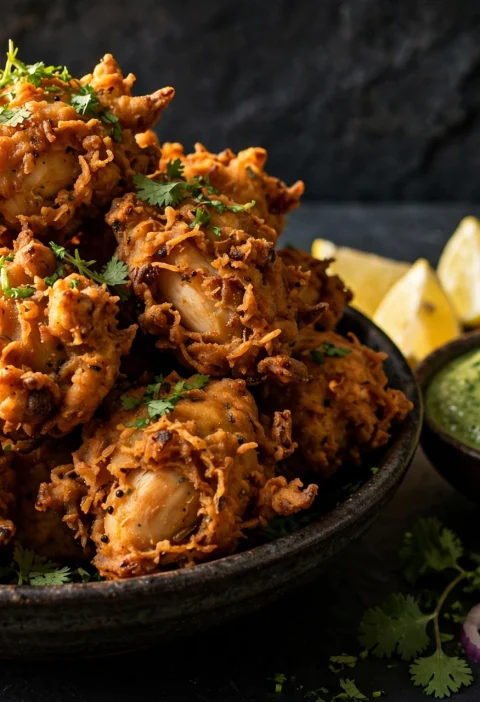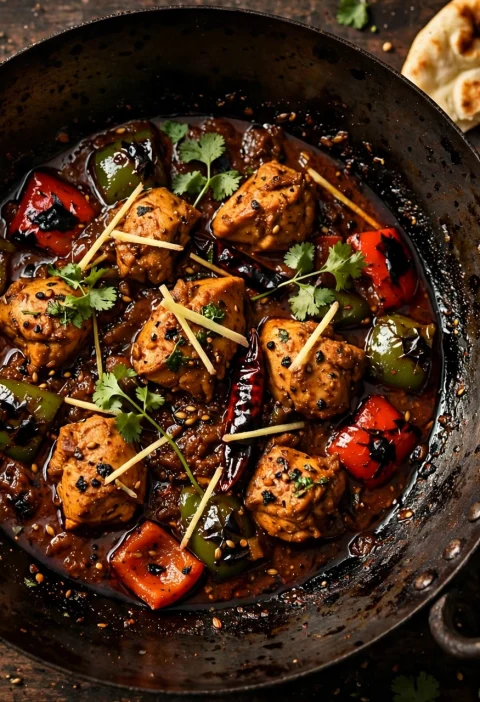
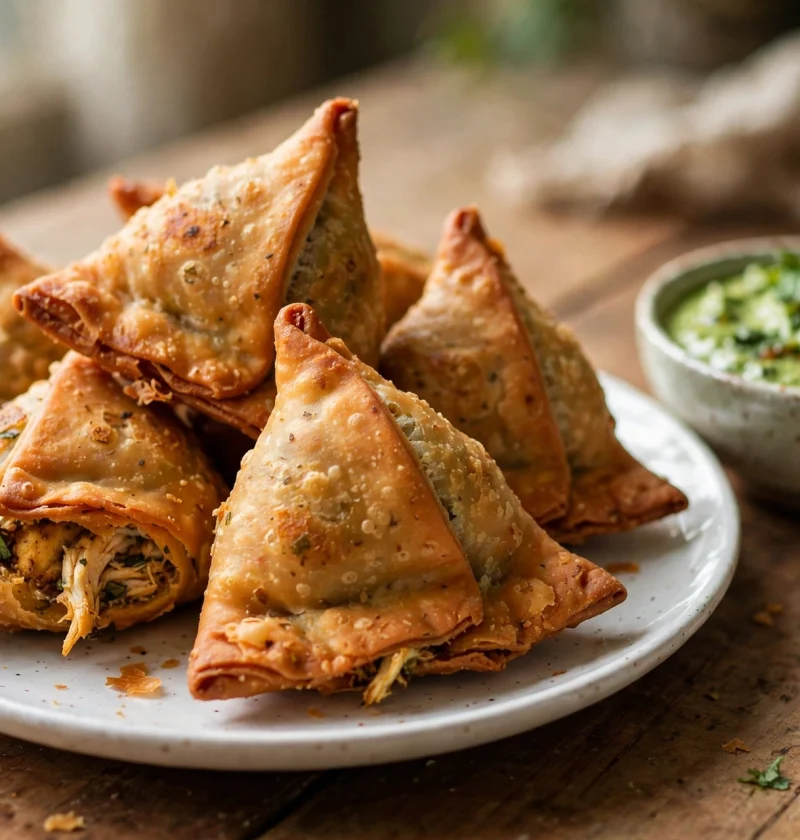
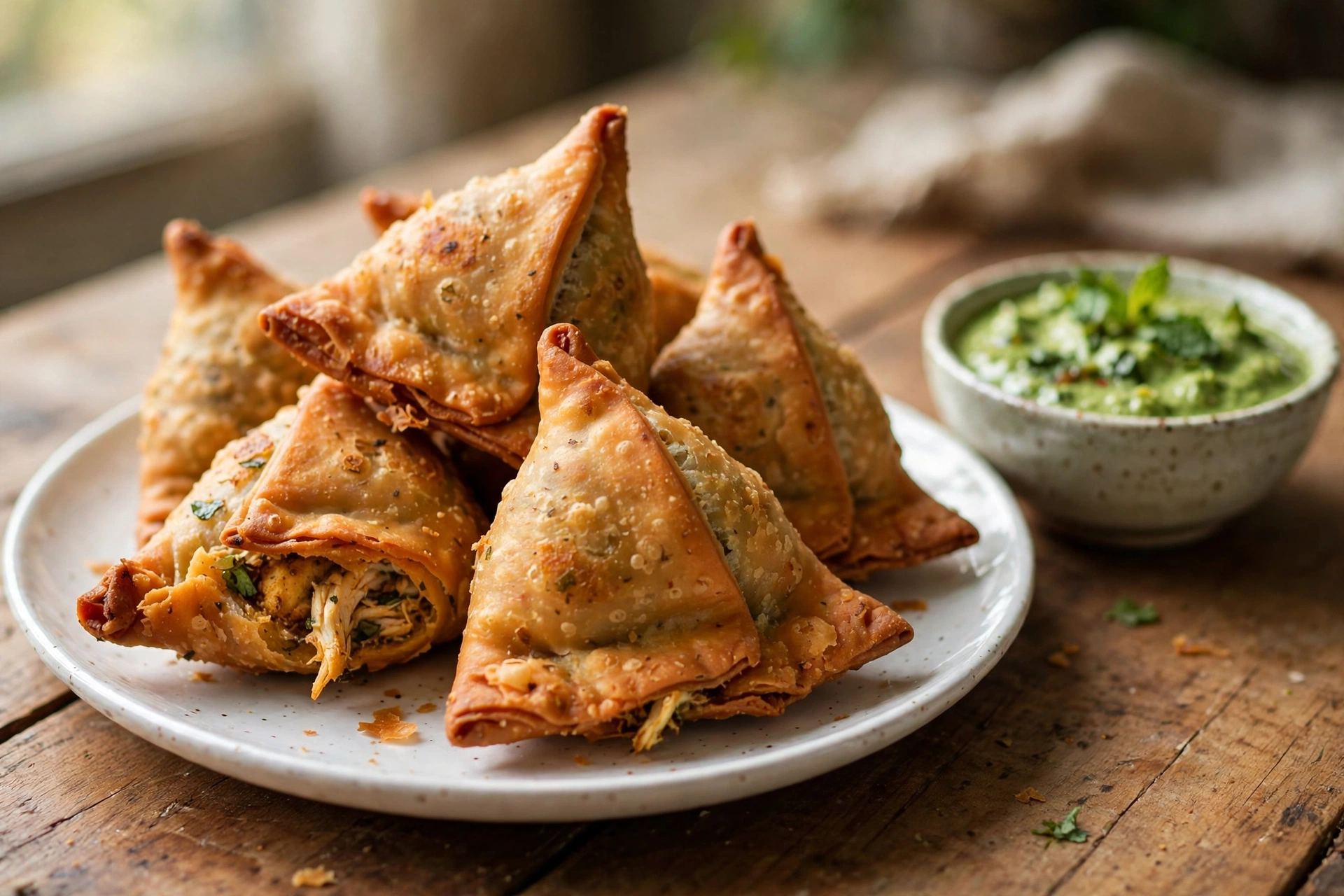
There’s nothing like biting into a hot chicken samosa and hearing that crackle — a shatteringly crisp, flaky shell giving way to juicy, warmly spiced chicken keema. These golden triangles are the star of every party platter, Ramadan iftar table, and rainy-day chai session, and making them at home is easier than most people think. This homemade chicken samosa recipe walks you through everything: a simple from-scratch chicken samosa dough, a flavorful dry chicken keema filling that won’t make your samosas soggy or burst, how to fold samosa cones like a pro, and the frying trick that guarantees a blistered, crispy shell every time. Even better — this recipe is built for make-ahead cooking: shape a big batch and freeze them, so fresh fried samosas are just 10 minutes away whenever guests show up.
Why You’ll Love This Chicken Samosa
- Truly crispy shell — the dough uses ajwain and a firm, short knead for that classic flaky, blistered crunch.
- Dry filling = no bursting — the chicken keema is cooked until every drop of moisture evaporates, so your samosas seal perfectly and never turn soggy.
- Freeze-friendly — make 24 ahead, freeze unbaked, and fry straight from frozen for instant party snacks.
- Baked & air fryer options — same dough and filling, with timing included for baked chicken samosa and chicken samosa air fryer versions.
Chicken Samosa Ingredients
For the Chicken Samosa Dough
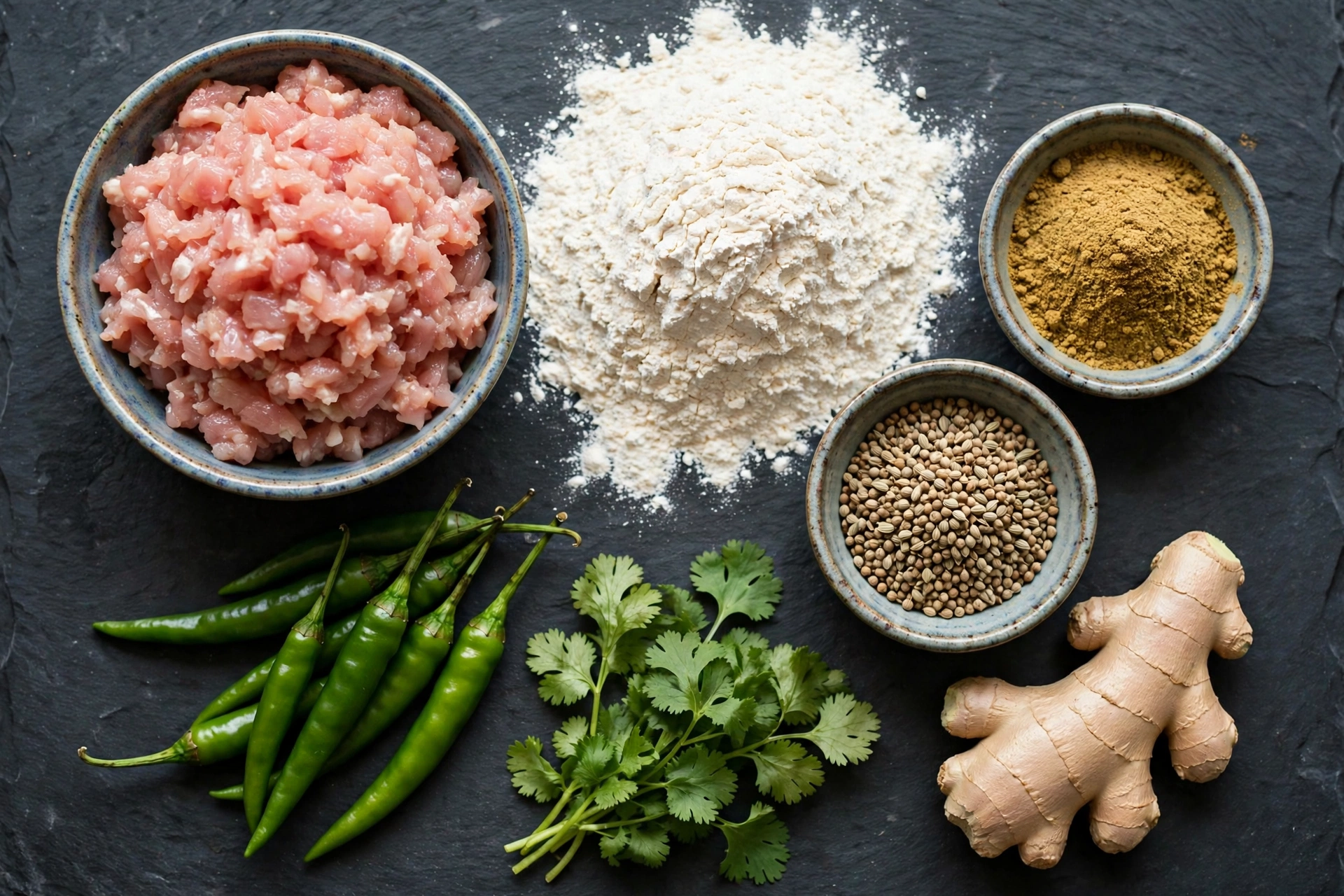
- 2 cups (250g) all-purpose flour (maida)
- 1 teaspoon ajwain (carom seeds), lightly crushed
- ¾ teaspoon salt
- 4 tablespoons neutral oil (or melted ghee for extra flavor)
- ¾ cup (180ml) cold water, plus 1–2 tablespoons more as needed
For the Chicken Keema Filling
- 1 tablespoon oil
- 1 large onion, finely chopped (about 1½ cups)
- 500g (1.1 lbs) chicken keema (minced chicken — ask your butcher for a medium grind, not paste-fine)
- 1 tablespoon ginger garlic paste
- 2–3 green chilies, finely minced (adjust to your heat preference)
- 1 teaspoon ground cumin
- 1 teaspoon ground coriander
- ½ teaspoon turmeric powder
- 1 teaspoon garam masala
- 1 teaspoon salt, or to taste
- ½ cup frozen peas (optional but classic)
- 3 tablespoons fresh cilantro, chopped
- 1 tablespoon lemon juice
For the Samosa Sealing Paste & Frying
- 2 tablespoons all-purpose flour
- 3–4 tablespoons water (for a thick, glue-like paste)
- Neutral oil for deep frying (about 4 cups / 1 liter)
How to Make Chicken Samosa
Step 1: Make the Dough
In a large bowl, whisk together the flour, crushed ajwain, and salt. Rub in the oil with your fingertips until the mixture looks like coarse breadcrumbs — this is the secret to a flaky, crispy shell. Add the cold water gradually and knead for 8–10 minutes until you have a firm, smooth dough (firmer than roti dough; it should not be soft or stretchy). Cover with a damp cloth and rest for 30 minutes.
Step 2: Cook the Dry Chicken Keema Filling
Heat 1 tablespoon of oil in a wide pan over medium heat. Sauté the onion for 5–6 minutes until soft and lightly golden. Add the ginger garlic paste and green chilies; cook 1 minute until fragrant. Add the chicken keema and break it apart with your spoon. Cook for 8–10 minutes, stirring, until no pink remains and the chicken reaches 165°F (74°C). Stir in the cumin, coriander, turmeric, garam masala, and salt. Now the critical part: keep cooking for another 5–7 minutes, stirring frequently, until ALL moisture has evaporated and the filling looks dry, crumbly, and slightly browned at the edges. Add the peas and cook 2 more minutes. Remove from heat, stir in the cilantro and lemon juice, and cool completely (at least 30 minutes — never fill samosas with warm filling).
Step 3: Shape the Wrappers
Divide the rested dough into 6 equal balls. Roll each into a thin oval, about 8 inches long and 5 inches wide. Cut each oval in half crosswise to get 12 half-moon wrappers. Keep the stack covered with a damp cloth so they don’t dry out — dry edges won’t seal.
Step 4: Fold and Fill the Samosas
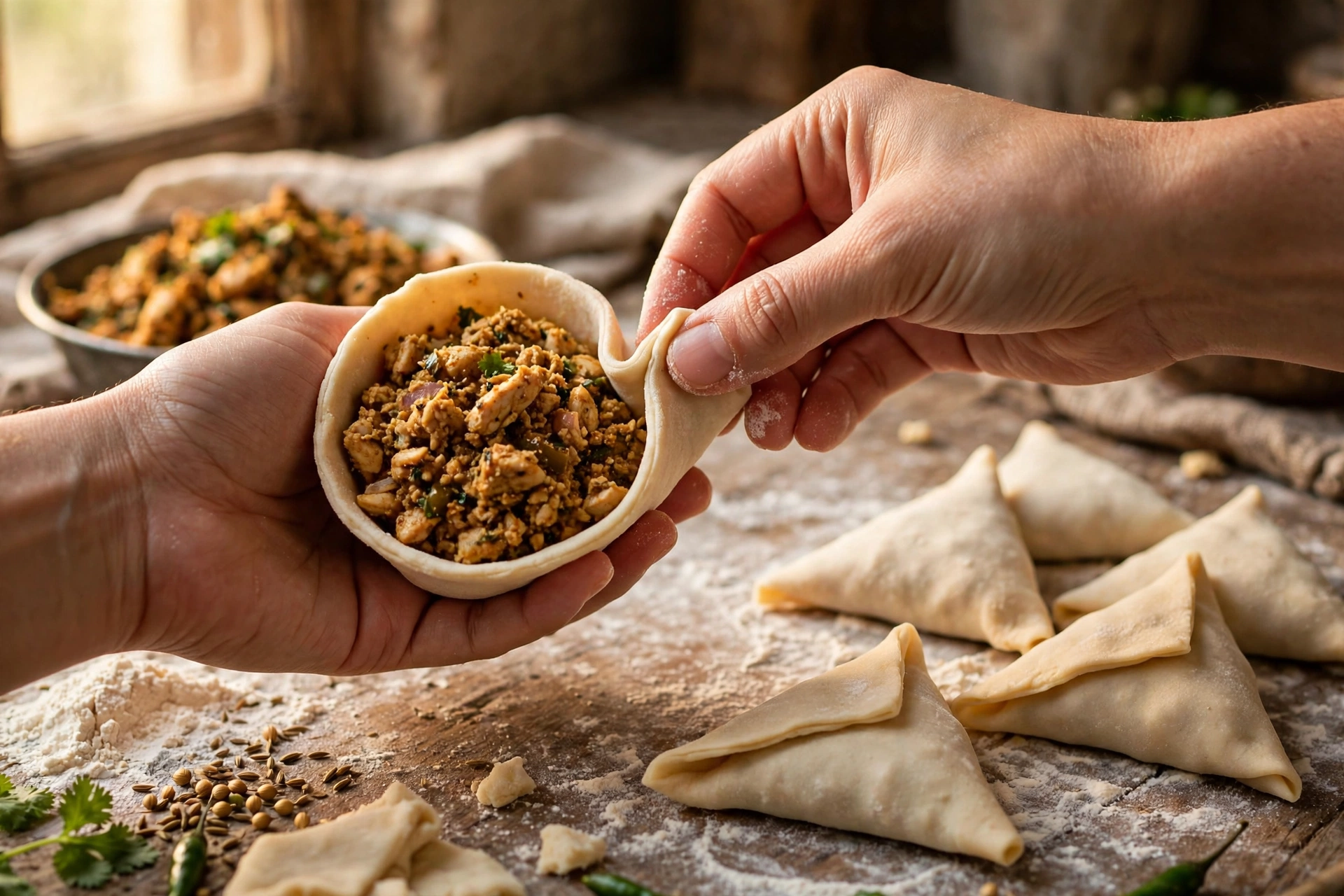
Take one wrapper with the straight cut edge facing up. Fold the right corner to the center, then fold the left corner over it to form a cone, overlapping the edges. Dab samosa sealing paste along the overlap and press firmly to seal. Hold the cone in your palm, open it up, and spoon in 1½–2 tablespoons of the cooled filling — don’t overfill. Run sealing paste along the entire open rim, then pinch the edges together firmly, pressing out any air pockets. For extra insurance, press the sealed edge with a fork. Repeat with the remaining wrappers.
Step 5: Fry Until Golden and Crisp
Heat the oil in a deep kadai or wok to 325–350°F (165–175°C) — medium-low, not ripping hot. (Low-medium heat is essential: it lets the dough cook through and blister without browning too fast.) Fry 4 samosas at a time for 6–8 minutes, turning occasionally, until deep golden and crisp all over. Lift out with a slotted spoon and drain on a wire rack set over a tray (a rack keeps the bottoms crisp; paper towels trap steam).
Step 6: Serve Hot
Serve immediately with mint chutney (or tamarind chutney) and a sprinkle of chaat masala if you like. Samosas are at their absolute best within 30 minutes of frying.
Tips for the Best Chicken Samosa
- Dry filling is everything. Any moisture left in the keema turns to steam inside the samosa and either bursts the seam or makes the shell soggy. Cook the filling until it looks dry and crumbly — when in doubt, cook it 2 minutes longer.
- Cool the filling completely. Warm filling softens the dough from the inside and weakens the seal. Spread it on a plate to cool faster.
- Firm dough, not soft. A soft, stretchy dough puffs up like a puri instead of crisping like a samosa. It should feel firm and smooth after kneading.
- Don’t overfill. 1½–2 tablespoons of filling per samosa is plenty. Overfilled samosas won’t seal and burst in the oil.
- Fry low and slow. Oil that’s too hot browns the outside while the inside stays raw and doughy. 325–350°F (165–175°C) for 6–8 minutes gives you that blistered, glassy crunch.
- Seal twice. Paste the overlap when forming the cone AND paste the full rim when closing. If an edge feels dry, re-dab paste — it should feel tacky, not crumbly.
What to Serve with Chicken Samosa
Samosas practically demand chutneys: classic mint chutney (fresh mint + cilantro + green chili + lemon), sweet-tart tamarind chutney, or a quick raita. Turn them into a full snack spread with chai, pakoras, and a chopped kachumber salad. For a heartier meal, serve 2–3 samosas alongside a bowl of chana chaat. They also make brilliant appetizers for parties, game nights, and iftar spreads — which is exactly why the make-ahead freezer angle is so handy.
Storage and Reheating
- Refrigerator (fried): Store cooled samosas in an airtight container for up to 3 days. Re-crisp in a 375°F (190°C) oven or air fryer for 6–8 minutes — never microwave them (they go rubbery).
- Freezer (unbaked — best method): Arrange shaped, uncooked samosas in a single layer on a parchment-lined tray and freeze solid (about 2 hours). Transfer to a freezer bag with parchment between layers. They keep for up to 2 months. Fry or bake straight from frozen — add 2–3 minutes to the cook time.
- Freezer (fried): Let fried samosas cool completely, freeze in a single layer, then bag. Reheat from frozen at 375°F (190°C) for 10–12 minutes until hot and crisp.
- Filling only: The cooked keema filling keeps 3 days refrigerated or 2 months frozen — handy for assembling fresh samosas on demand.
- Food safety: Don’t leave fried samosas at room temperature for more than 2 hours. Thaw nothing — cook from frozen for the crispiest result.

More Chicken Recipes You’ll Love
Chicken Samosa FAQs
Why do my samosas burst open while frying?
Three usual suspects: (1) the edges weren’t sealed with enough samosa sealing paste — re-dab any dry spots; (2) overfilling — stick to 1½–2 tablespoons per samosa; (3) oil too hot, which makes the filling steam violently and blow the seam. Also make sure your filling is completely dry and cool before assembling.
Can I use store-bought samosa patti instead of making the dough?
Yes! Thaw frozen samosa patti (ready-made pastry sheets) as per the package, cut into strips if needed, and fold exactly the same way — they still need the flour-water sealing paste. They fry up a little thinner and crisper than homemade dough. The filling, frying, and freezing instructions are identical.
Can I bake chicken samosas instead of frying?
Absolutely. Brush both sides generously with oil, place on a parchment-lined tray, and bake at 400°F (200°C) for 22–25 minutes, flipping halfway, until golden. They won’t be quite as blistered as fried, but they’re still deliciously crisp with far less oil.
How do I make chicken samosa in the air fryer?
Spray or brush the shaped samosas with oil on all sides. Air fry at 360°F (180°C) for 10–12 minutes, flipping halfway, until golden and crisp. Work in a single layer — don’t overcrowd the basket.
How far ahead can I make samosas for a party?
Shape them up to 2 months ahead and keep them frozen (the unbaked-freeze method above). On party day, fry or bake straight from frozen — hot, crispy samosas in under 15 minutes with zero day-of prep.
Chicken Samosa
Ingredients
Method
- Make the Dough: In a large bowl, whisk together the flour, crushed ajwain, and salt. Rub in the oil with your fingertips until the mixture looks like coarse breadcrumbs – this is the secret to a flaky, crispy shell. Add the cold water gradually and knead for 8-10 minutes until you have a firm, smooth dough (firmer than roti dough; it should not be soft or stretchy). Cover with a damp cloth and rest for 30 minutes.
- Cook the Dry Chicken Keema Filling: Heat 1 tablespoon of oil in a wide pan over medium heat. Saute the onion for 5-6 minutes until soft and lightly golden. Add the ginger garlic paste and green chilies; cook 1 minute until fragrant. Add the chicken keema and break it apart with your spoon. Cook for 8-10 minutes, stirring, until no pink remains and the chicken reaches 165F (74C). Stir in the cumin, coriander, turmeric, garam masala, and salt. Keep cooking for another 5-7 minutes, stirring frequently, until ALL moisture has evaporated and the filling looks dry, crumbly, and slightly browned at the edges. Add the peas and cook 2 more minutes. Remove from heat, stir in the cilantro and lemon juice, and cool completely (at least 30 minutes – never fill samosas with warm filling).
- Shape the Wrappers: Divide the rested dough into 6 equal balls. Roll each into a thin oval, about 8 inches long and 5 inches wide. Cut each oval in half crosswise to get 12 half-moon wrappers. Keep the stack covered with a damp cloth so they don’t dry out – dry edges won’t seal.
- Fold and Fill the Samosas: Take one wrapper with the straight cut edge facing up. Fold the right corner to the center, then fold the left corner over it to form a cone, overlapping the edges. Dab samosa sealing paste along the overlap and press firmly to seal. Hold the cone in your palm, open it up, and spoon in 1 1/2 to 2 tablespoons of the cooled filling – don’t overfill. Run sealing paste along the entire open rim, then pinch the edges together firmly, pressing out any air pockets. For extra insurance, press the sealed edge with a fork. Repeat with the remaining wrappers.
- Fry Until Golden and Crisp: Heat the oil in a deep kadai or wok to 325-350F (165-175C) – medium-low, not ripping hot. Fry 4 samosas at a time for 6-8 minutes, turning occasionally, until deep golden and crisp all over. Lift out with a slotted spoon and drain on a wire rack set over a tray (a rack keeps the bottoms crisp; paper towels trap steam).
- Serve Hot: Serve immediately with mint chutney (or tamarind chutney) and a sprinkle of chaat masala if you like. Samosas are at their absolute best within 30 minutes of frying.