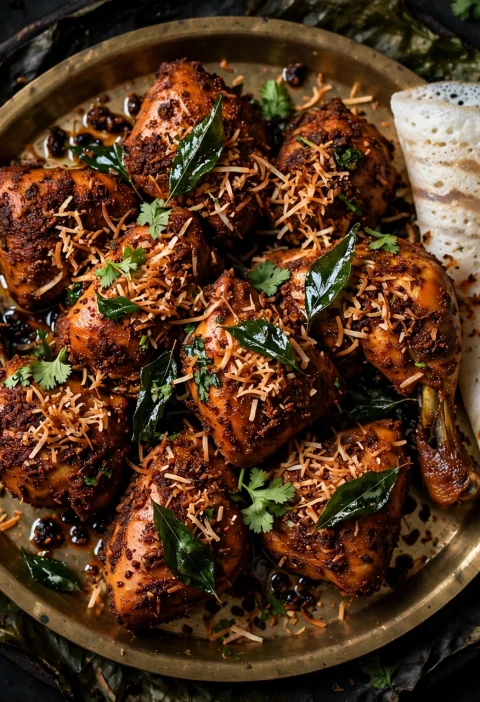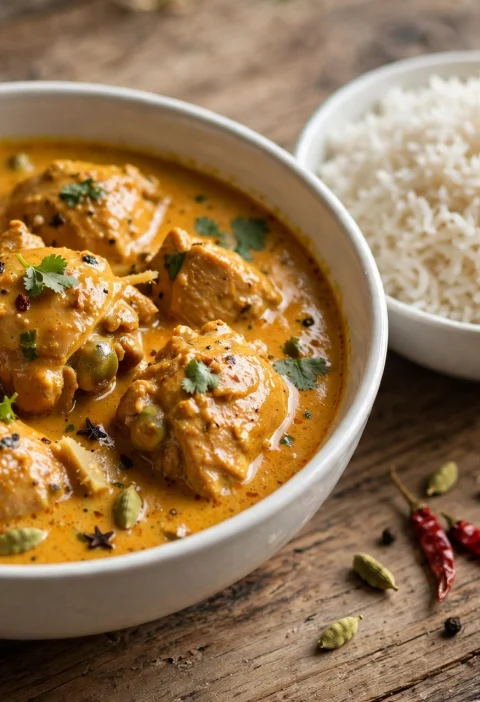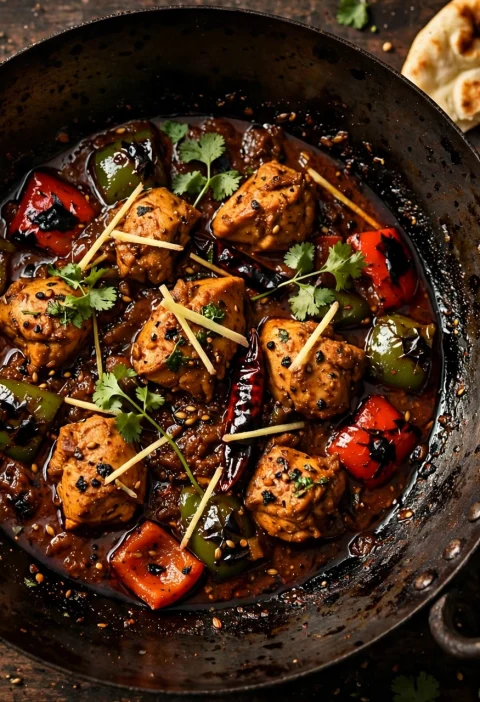
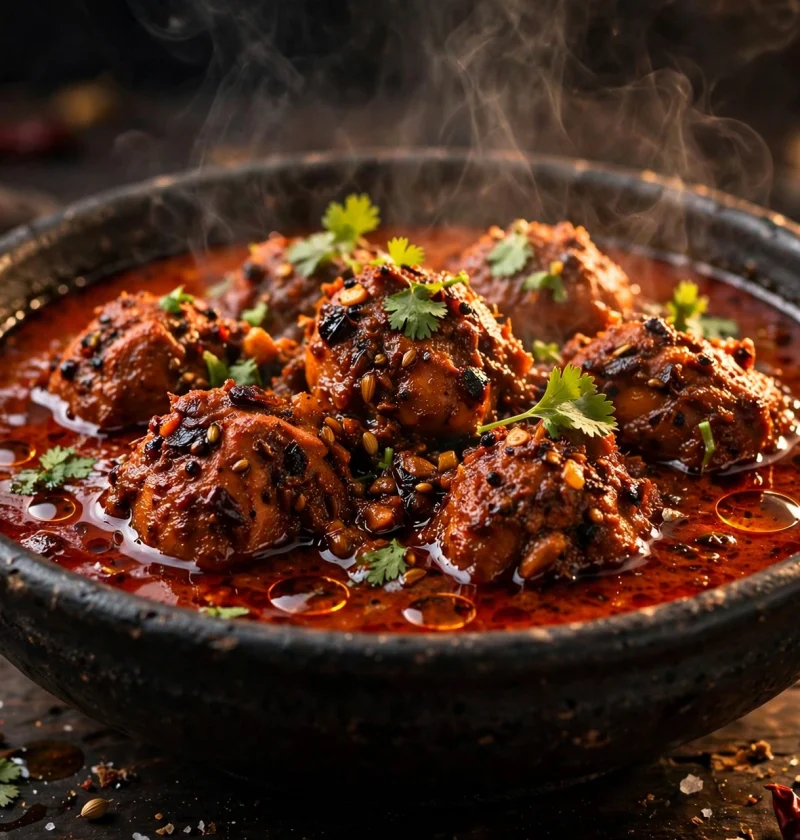
Heat warning first: this chicken kolhapuri recipe is genuinely, gloriously hot. Kolhapuri masala — the fiery spice blend this Maharashtrian chicken curry is named for — is built on dried red chilies and black pepper, and restaurants and dhabas in Kolhapur serve it as one of the spiciest chicken curries in India. If you love hot and spicy chicken curry, you’re in the right place — but make it with 4–5 chilies the first time and work your way up, not the other way around.
The real star here is the homemade Kolhapuri masala from scratch: whole spices, dried red chilies, desiccated coconut, sesame seeds, poppy seeds, and curry leaves, all dry-roasted until dark and fragrant, then ground into a deep-red powder that tastes nothing like a jar of garam masala. Yes, there is a store-bought shortcut (use 2–3 tablespoons of ready-made Kolhapuri masala instead), but the homemade version takes only 10 extra minutes and the difference is enormous.
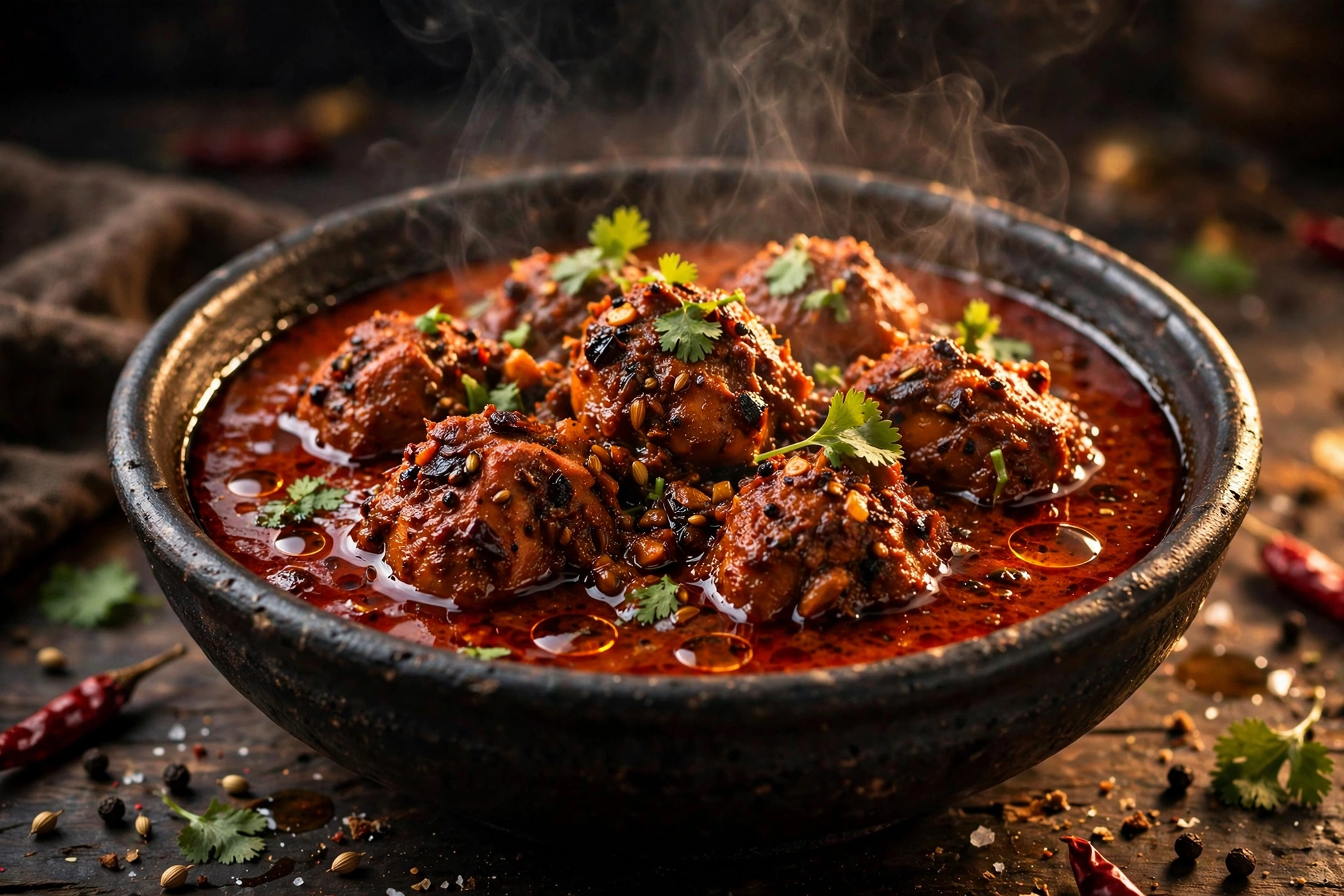
Why You’ll Love This Chicken Kolhapuri
- Homemade masala from scratch — the dry-roasted coconut-sesame spice blend is what makes authentic kolhapuri chicken curry taste like Kolhapur, not like a generic curry powder.
- Unapologetically fiery — dried red chilies + black pepper + mustard heat, with tamarind for a tangy backbone that keeps the spice balanced.
- Restaurant-style red gravy — the chicken kolhapuri gravy gets its deep color and roasted body from toasted coconut and sesame, no food coloring needed.
- Better than the basic versions — most online recipes skip the homemade masala entirely. Ours doesn’t.
Chicken Kolhapuri Ingredients
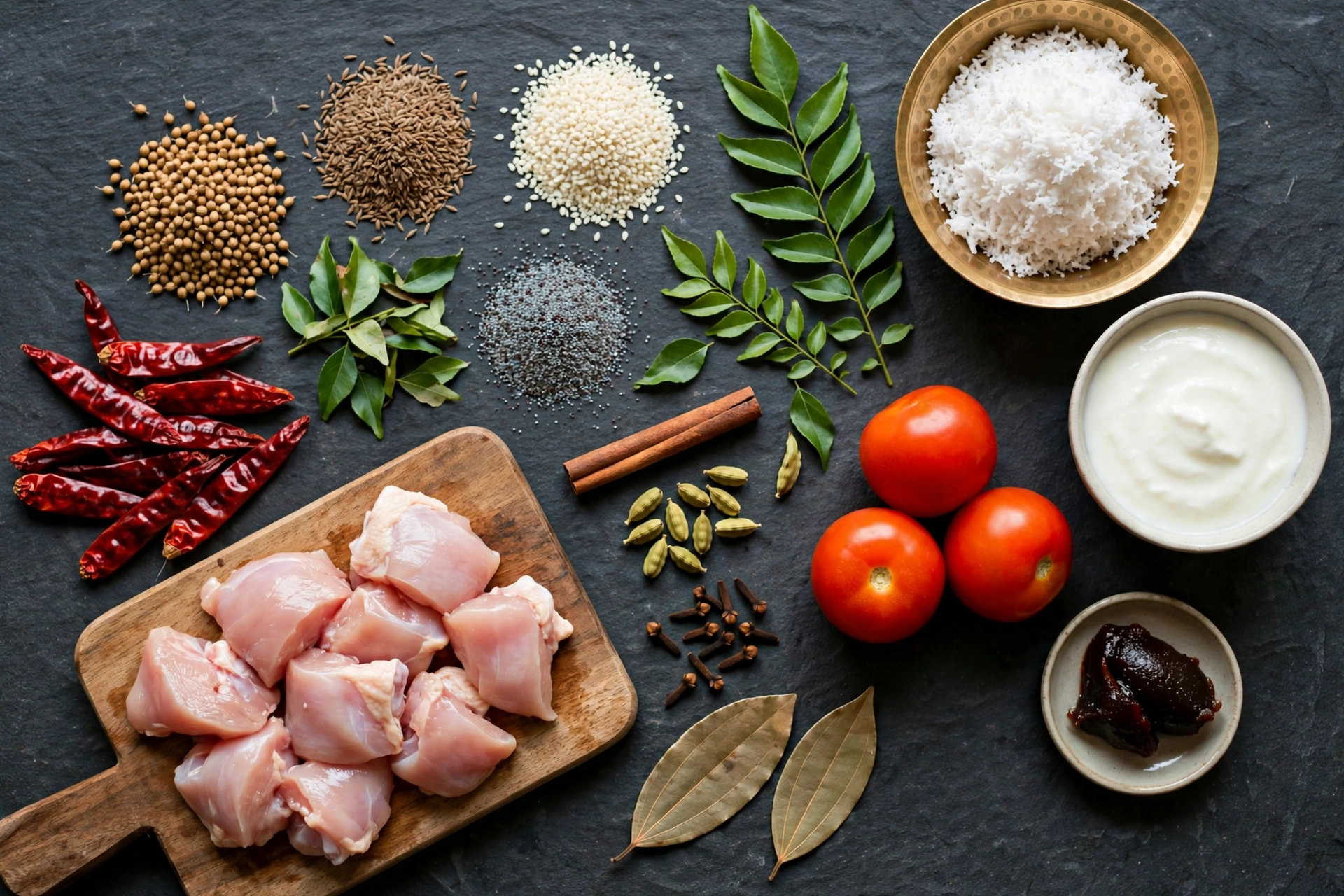
For the Homemade Kolhapuri Masala (makes ~½ cup)
- 8–10 dried red chilies (start with 5 for a milder version)
- 2 tablespoons coriander seeds
- 1 tablespoon cumin seeds
- 1 tablespoon white sesame seeds
- 1 tablespoon poppy seeds
- 3 tablespoons desiccated coconut
- 8–10 curry leaves
- 1 teaspoon black peppercorns
- 1 teaspoon mustard seeds
- 1 teaspoon fennel seeds
- 4 cloves
- 2 green cardamoms
- 1-inch piece cinnamon stick
- 1 bay leaf
- ½ teaspoon turmeric powder (stirred in after grinding)
Shortcut: replace everything above with 2½ tablespoons store-bought Kolhapuri masala.
For the Chicken
- 1½ lbs (700g) boneless, skinless chicken thighs, cut into 1½-inch pieces
- ½ cup plain whole-milk yogurt
- 1 tablespoon ginger garlic paste
- 1 teaspoon salt
- 1 tablespoon of the homemade Kolhapuri masala (or 1 teaspoon store-bought)
For the Curry
- 3 tablespoons oil (Kolhapuri dhaba style uses a generous pour)
- 2 large onions, finely chopped
- 8–10 curry leaves
- 1 tablespoon ginger garlic paste
- 2 medium tomatoes, chopped (or 200g crushed tomatoes)
- 3 tablespoons homemade Kolhapuri masala (or 2½ tablespoons store-bought)
- 1 teaspoon tamarind pulp, soaked in ¼ cup warm water (or ½ teaspoon tamarind paste)
- 1½ cups warm water
- 1 teaspoon salt, or to taste
- Fresh coriander leaves, chopped (for garnish)
How to Make Chicken Kolhapuri
Step 1: Make the Kolhapuri Masala from Scratch
Heat a dry, heavy pan over medium-low heat. Add the dried red chilies, coriander seeds, cumin seeds, peppercorns, mustard seeds, fennel seeds, cloves, cardamoms, cinnamon, and bay leaf. Toast, stirring constantly, for 3–4 minutes until deeply aromatic and a shade darker. Add the sesame seeds, poppy seeds, and curry leaves; toast 1 minute more. Add the desiccated coconut last and toast 1–2 minutes until golden-brown — watch it closely, it burns fast. Cool completely, then grind to a fine powder and stir in the turmeric. Set aside.
Step 2: Marinate the Chicken
In a large bowl, whisk together the yogurt, ginger garlic paste, salt, and 1 tablespoon of the homemade Kolhapuri masala. Add the chicken pieces and toss to coat every piece. Cover and refrigerate for at least 30 minutes (up to 4 hours for deeper flavor).
Step 3: Brown the Onions and Bloom the Spices
Heat the oil in a kadai or heavy-bottomed pan over medium-high heat. Add the chopped onions and cook for 8–10 minutes, stirring often, until deep golden-brown. Add the curry leaves and ginger garlic paste; cook 1 minute until fragrant. Stir in the chopped tomatoes and cook 4–5 minutes until they soften and the oil begins to separate at the edges.
Step 4: Build the Gravy Base
Add the 3 tablespoons of Kolhapuri masala and the tamarind water. Stir and cook for 2–3 minutes until the masala darkens and smells intensely fragrant — this is the step that builds the signature chicken kolhapuri gravy. Pour in the warm water, add the salt, and bring to a boil.
Step 5: Simmer the Chicken
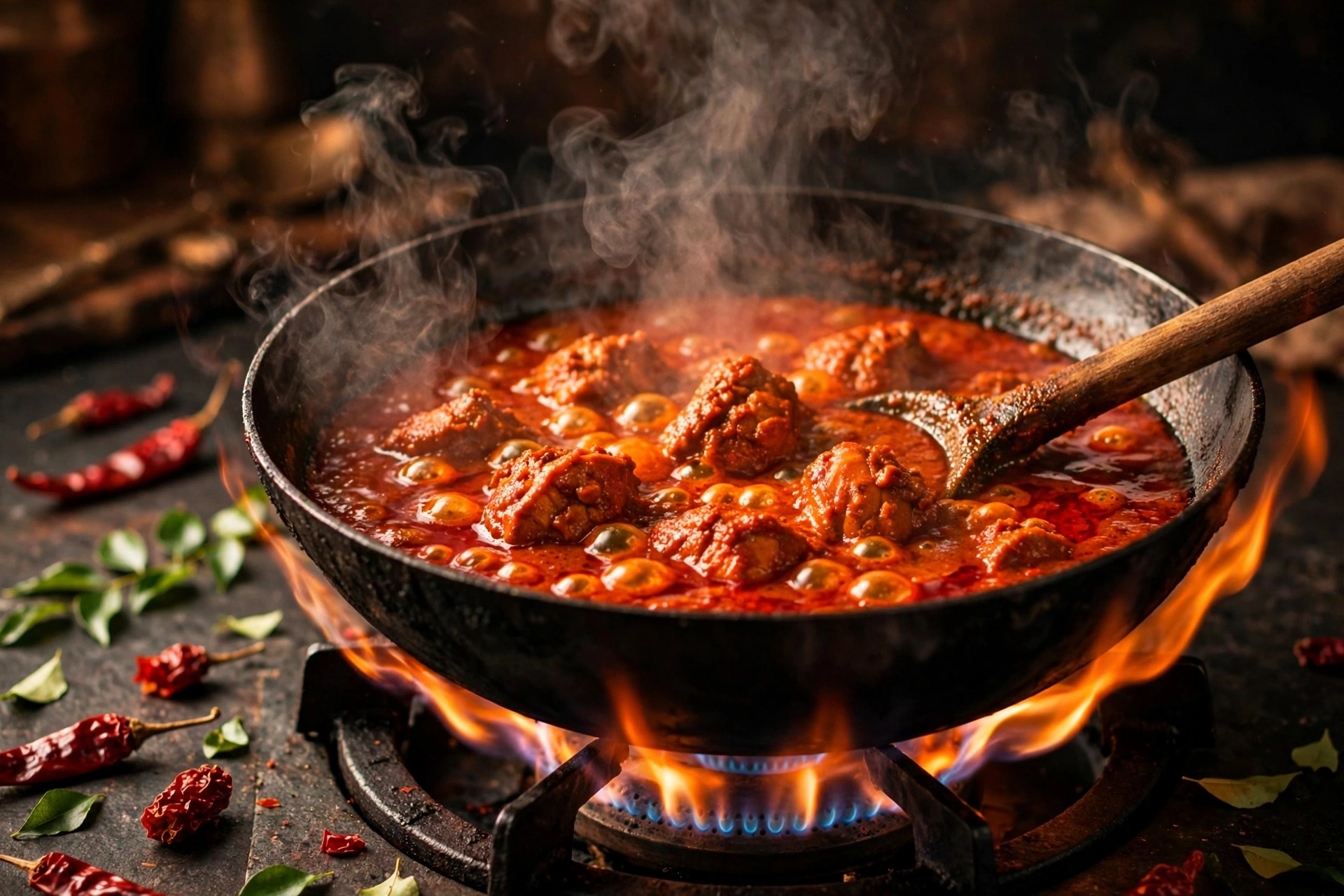
Add the marinated chicken along with all its marinade. Bring back to a simmer, then reduce the heat to medium-low, partially cover, and cook for 20–25 minutes, stirring occasionally, until the chicken is cooked through (165°F / 74°C internal temperature) and the gravy thickens to coat the chicken pieces — this is the kolhapuri chicken dhaba style finish, rich and clinging, not soupy. Add splashes of warm water only if it gets too thick.
Step 6: Rest and Serve
Take the curry off the heat and rest it 5 minutes — the oil will settle into that glossy red layer on top. Garnish with fresh coriander and serve piping hot.
Tips for the Best Chicken Kolhapuri
- Respect the chilies, control them. The recipe as written is properly hot. For medium heat, use 4–5 dried red chilies in the masala and 2 tablespoons of masala in the curry instead of 3. For mild, there is no such thing — pick a different curry!
- Toast the coconut until truly golden. Pale coconut gives a pale curry; golden-brown coconut is what delivers the deep red-brown color and roasted flavor.
- Curry leaves go in the hot oil. Adding them to hot oil (not to the dry-roasted masala only) releases their full aroma — they are a non-negotiable Kolhapuri signature.
- Thighs over breasts, always. This is a long simmer with aggressive spice; chicken thighs stay juicy, breasts turn chalky.
- Tamarind is the balancer. Kolhapuri curry without tamarind’s tang tastes one-dimensionally hot. If you only have paste, use ½ teaspoon — it’s concentrated.
- Drier version? Make kolhapuri chicken sukka. Cook the curry with only ½ cup water and let it reduce completely until the masala clings dry to the chicken — same recipe, no gravy.
What to Serve with Chicken Kolhapuri
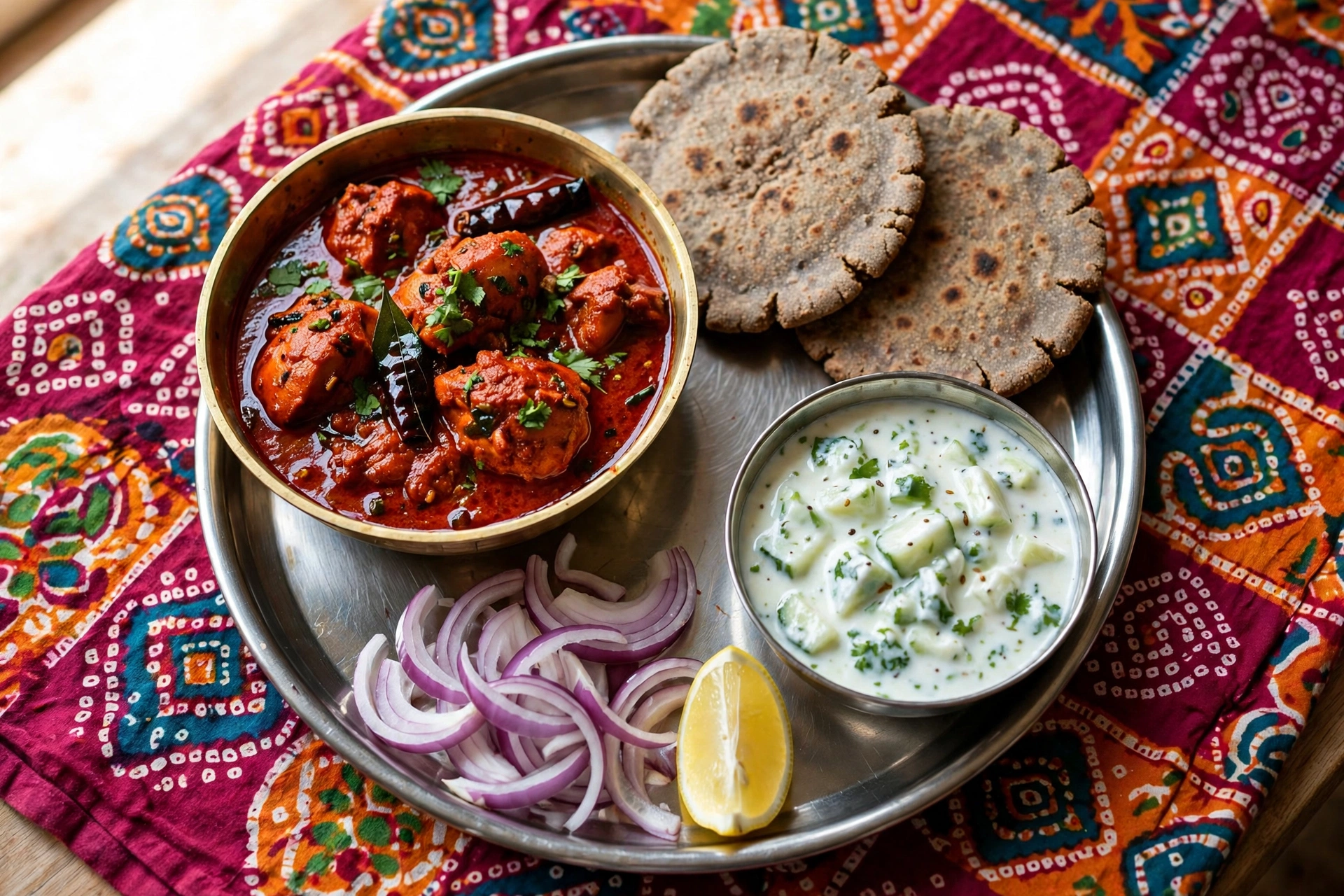
In Maharashtra this curry is traditionally eaten with bhakri (pearl millet flatbread) — the nutty, sturdy bhakri is the perfect vehicle for fiery gravy and it’s how Kolhapuri dhabas serve it. If bhakri isn’t on hand, jowar roti, tandoori roti, or steamed basmati rice all work beautifully. A cooling cucumber raita on the side is almost essential with this heat level — think of it as a fire extinguisher. Pickled onions and a wedge of lemon complete the dhaba plate.
Storage and Reheating
- Refrigerator: Store in an airtight container for up to 4 days. Like most spice-heavy curries, the flavor deepens overnight — day two is often better than day one.
- Freezer: Freezes well for up to 3 months. Thaw overnight in the refrigerator before reheating.
- Reheating: Warm gently on the stovetop over low-medium heat, adding a splash of water if the gravy has thickened too much. The oil may separate slightly after freezing — stir it back in.
More Chicken Recipes You’ll Love
Chicken Kolhapuri FAQs
How spicy is chicken kolhapuri, really?
Very. It’s one of the hottest regional chicken curries in India — significantly hotter than a typical restaurant chicken curry or even a vindaloo. The heat comes from dried red chilies and black pepper rather than fresh green chilies. Start with fewer chilies and work up.
Can I use store-bought Kolhapuri masala instead of making it?
Yes — use 2½ tablespoons in the curry plus 1 teaspoon in the marinade, and skip Step 1. But homemade is worth it: store-bought blends vary wildly in heat and freshness, and the dry-roasted coconut-sesame base is what makes this recipe special.
What is the difference between Kolhapuri masala and garam masala?
Garam masala is a mild, aromatic “finishing” blend (cardamom, cinnamon, cloves). Kolhapuri masala is a full cooking blend: it’s much hotter (dried red chilies, black pepper), includes roasted coconut, sesame seeds, poppy seeds, and curry leaves, and forms the base of the curry rather than just finishing it. They are not interchangeable.
What is the difference between chicken kolhapuri and kolhapuri chicken sukka?
Same masala, different moisture. Chicken kolhapuri has a thick red gravy (this recipe). Kolhapuri chicken sukka is the dry version — the chicken is cooked until the masala clings to it with no gravy. To convert this recipe, use only ½ cup water and simmer uncovered until dry.
Can I make chicken kolhapuri with chicken breast?
You can, but thighs are strongly recommended — breast meat dries out in the long, hot simmer and can’t absorb the masala as well. If using breast, cut larger pieces and reduce the final simmer to 12–15 minutes.
Chicken Kolhapuri (Fiery Maharashtrian Spice Curry)
Ingredients
Method
- Make the Kolhapuri Masala from Scratch: Heat a dry, heavy pan over medium-low heat. Add the dried red chilies, coriander seeds, cumin seeds, peppercorns, mustard seeds, fennel seeds, cloves, cardamoms, cinnamon, and bay leaf. Toast, stirring constantly, for 3-4 minutes until deeply aromatic and a shade darker. Add the sesame seeds, poppy seeds, and curry leaves; toast 1 minute more. Add the desiccated coconut last and toast 1-2 minutes until golden-brown, watching closely so it does not burn. Cool completely, grind to a fine powder, and stir in the turmeric. Set aside.
- Marinate the Chicken: In a large bowl, whisk together the yogurt, ginger garlic paste, salt, and 1 tablespoon of the homemade Kolhapuri masala. Add the chicken pieces and toss to coat every piece. Cover and refrigerate for at least 30 minutes (up to 4 hours for deeper flavor).
- Brown the Onions and Bloom the Spices: Heat the oil in a kadai or heavy-bottomed pan over medium-high heat. Add the chopped onions and cook for 8-10 minutes, stirring often, until deep golden-brown. Add the curry leaves and ginger garlic paste; cook 1 minute until fragrant. Stir in the chopped tomatoes and cook 4-5 minutes until they soften and the oil begins to separate at the edges.
- Build the Gravy Base: Add the 3 tablespoons of Kolhapuri masala and the tamarind water. Stir and cook for 2-3 minutes until the masala darkens and smells intensely fragrant. Pour in the warm water, add the salt, and bring to a boil.
- Simmer the Chicken: Add the marinated chicken along with all its marinade. Bring back to a simmer, then reduce the heat to medium-low, partially cover, and cook for 20-25 minutes, stirring occasionally, until the chicken is cooked through (165F / 74C internal temperature) and the gravy thickens to coat the chicken pieces. Add splashes of warm water only if it gets too thick.
- Rest and Serve: Take the curry off the heat and rest it 5 minutes. The oil will settle into a glossy red layer on top. Garnish with fresh coriander and serve piping hot.