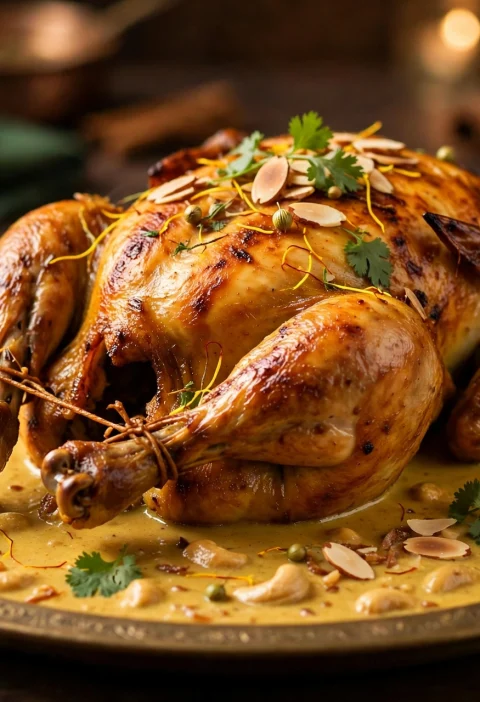
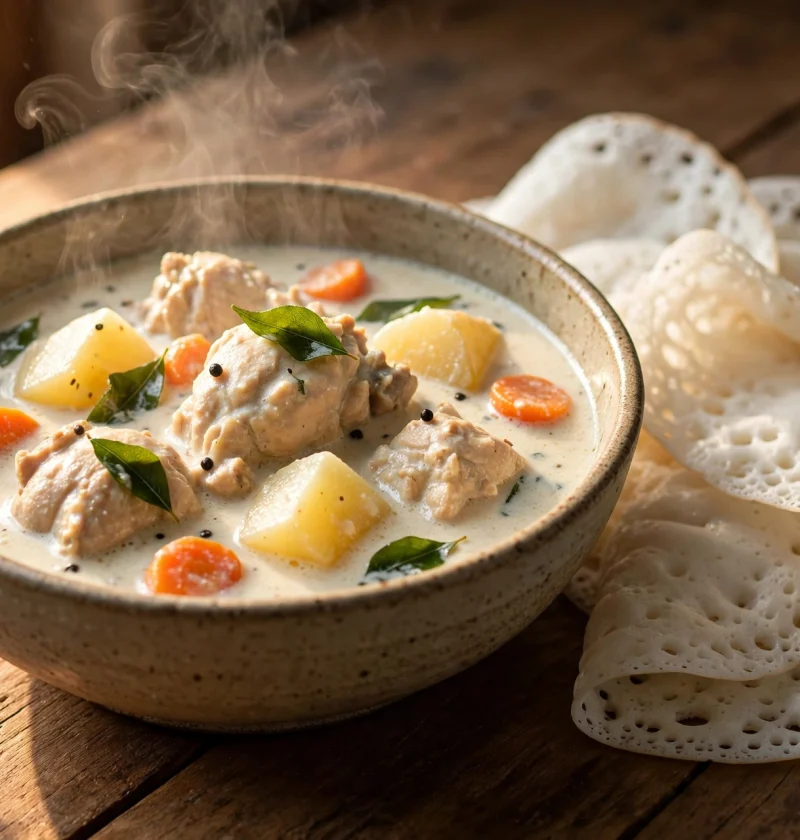
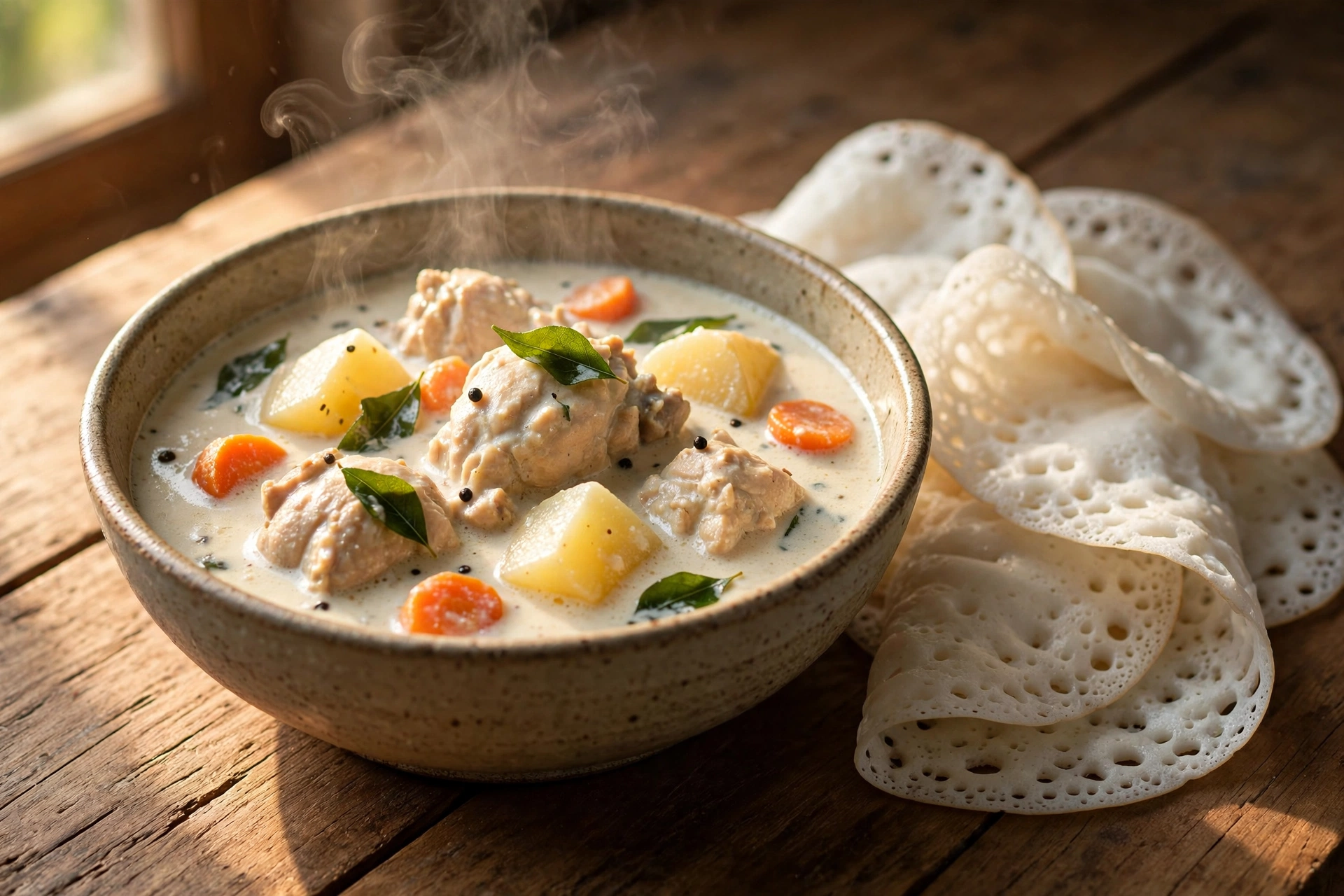
If you’re looking for a gentler side of Indian cooking, this Kerala chicken stew is it. Known locally as kozhi ishtu, it’s a mild, creamy coconut-milk stew from Kerala where tender chicken pieces simmer with potatoes, carrots and whole spices in fragrant coconut milk — no red chili, no heavy masala, just delicate flavor. It’s the dish Malayali families serve for breakfast with lacy appams, and it’s a lifesaver for anyone who loves curries but can’t handle the heat.
Why You’ll Love This Kerala Chicken Stew
- Kid-friendly and mild — the perfect alternative to fiery curries; gently spiced with black pepper and cardamom, not chili.
- One pot, 45 minutes — a simple simmer with vegetables that do half the work for you.
- Naturally creamy — thin + thick coconut milk gives a silky white gravy without any cream or flour.
- Iconic pairing — scoop it up with homemade appams, idiyappam, or plain bread and it’s pure comfort.
Kerala Chicken Stew Ingredients
For the Stew Base
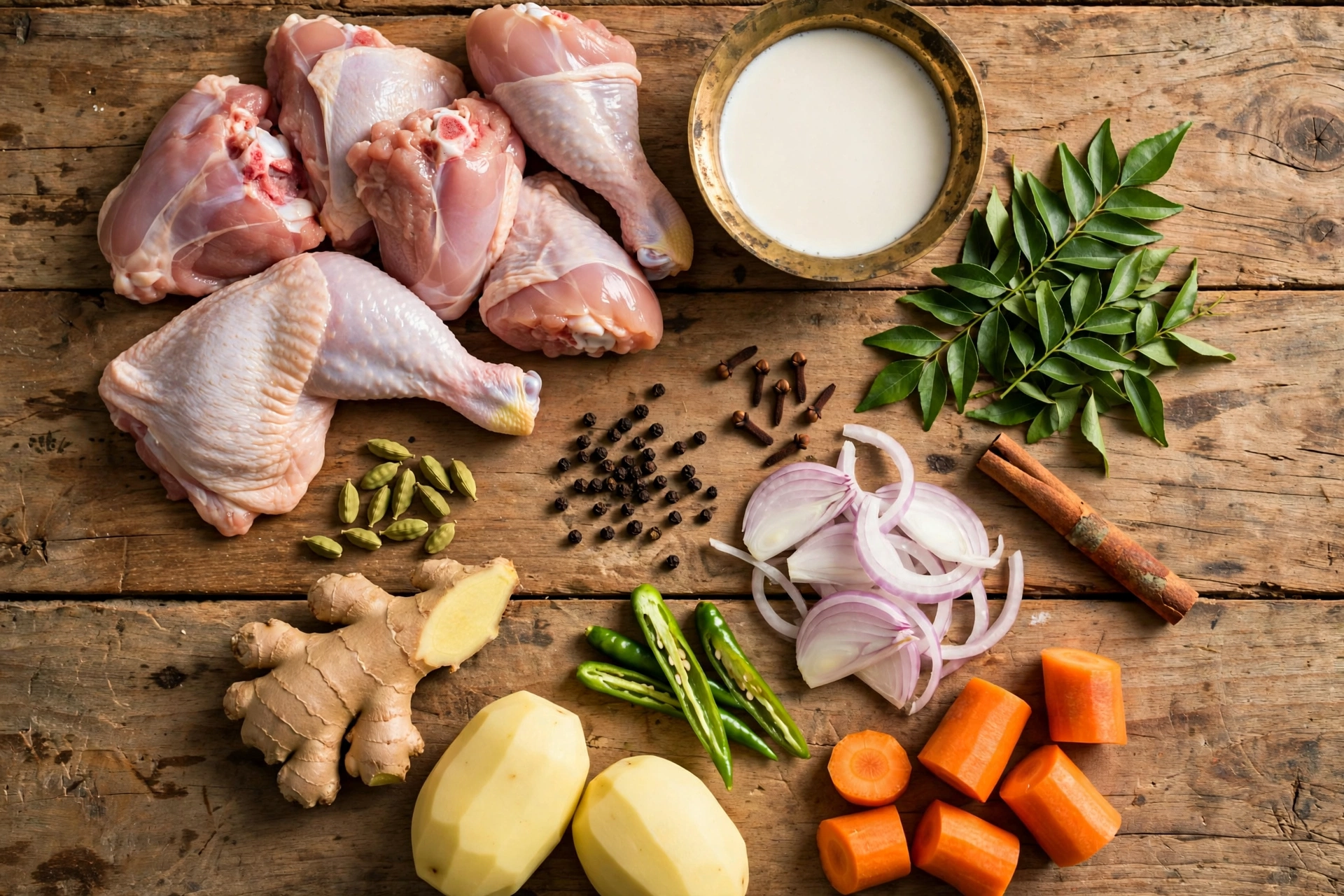
- 2 tablespoons coconut oil
- 1 large onion, thinly sliced
- 2-3 green chilies, slit lengthwise (use fewer for a truly mild stew)
- 1 tablespoon ginger garlic paste
- 10-12 fresh curry leaves
- 4 green cardamom pods, lightly crushed
- 3-4 cloves
- 1-inch cinnamon stick
- 1 teaspoon black peppercorns, coarsely crushed
For the Chicken and Vegetables
- 1 1/2 lbs (700g) bone-in chicken pieces, skin removed (or boneless thighs cut into large chunks)
- 2 medium potatoes, peeled and cut into large chunks
- 2 medium carrots, peeled and sliced into thick rounds
- 1 1/2 cups thin coconut milk
- 1 cup thick coconut milk
- 1 1/4 teaspoons salt, or to taste
For Tempering
- 1 teaspoon coconut oil + 6-8 curry leaves + 1/2 teaspoon crushed black peppercorns (for tempering)
How to Make Kerala Chicken Stew
Step 1: Temper the Whole Spices
Heat the coconut oil in a large heavy pot or Dutch oven over medium heat. Add the cardamom pods, cloves, cinnamon stick and crushed black peppercorns, and saute for 30 seconds until fragrant. Add the curry leaves and slit green chilies – they’ll splutter, so stand back slightly.
Step 2: Soften the Aromatics
Add the sliced onions and cook for 6-7 minutes until soft and translucent but NOT browned (browning is what darkens the stew – keep them pale for that classic white color). Stir in the ginger garlic paste and cook 1 minute until the raw smell disappears.
Step 3: Add Chicken and Thin Coconut Milk
Add the chicken pieces and salt, tossing to coat in the spiced oil. Pour in the thin coconut milk (thin milk goes first so the chicken cooks gently without the sauce splitting). Add the potatoes and carrots, bring to a gentle simmer, then cover and cook on low for 20-25 minutes until the chicken is cooked through (165°F / 74°C internal temperature) and the vegetables are fork-tender.
Step 4: Finish with Thick Coconut Milk
Uncover and stir in the thick coconut milk. Simmer gently for 3-4 minutes – do NOT let it come to a rolling boil, or the coconut milk may split. Taste and adjust salt. The stew should be creamy white and lightly coated over the back of a spoon.
Step 5: Temper and Serve
In a small pan, heat the remaining teaspoon of coconut oil and fry the curry leaves and crushed peppercorns for 20 seconds until crisp. Pour this tempering over the stew. Serve hot with appams, idiyappam, or bread.

Tips for the Best Kerala Chicken Stew
- Keep it white. The signature look comes from pale, unbrowned onions, no turmeric, and no red chili powder. Cook the onions only until translucent, and add thick coconut milk at the very end on low heat.
- Two coconut milks matter. Thin coconut milk cooks the chicken without splitting; thick coconut milk added at the end gives the creamy body. If using canned, dilute half the can with water for the “thin” portion.
- Don’t boil after adding thick milk. A rolling boil curdles coconut milk. Keep it at the barest simmer.
- Bone-in chicken wins. Bones enrich the stew’s flavor and the meat stays juicier during the long simmer. If using boneless, cut large chunks so they don’t fall apart.
- Fresh curry leaves are non-negotiable. They give kozhi ishtu its unmistakable Kerala aroma – dried leaves won’t deliver the same result.
What to Serve with Kerala Chicken Stew
The classic partner is appam – lacy, fermented rice pancakes with crispy edges that soak up the creamy gravy beautifully. No appams? Try idiyappam (string hoppers), plain steamed rice, dosa, or simply slices of soft white bread – the way many Kerala homes serve it for breakfast. A squeeze of lime over the top brightens everything.
Storage and Reheating
- Refrigerator: Store in an airtight container for up to 3 days. The stew thickens as it sits.
- Freezer: Freezes for up to 2 months, though coconut milk can separate slightly on thawing – stir well while reheating.
- Reheating: Warm gently on the stovetop over low heat, adding a splash of water or thin coconut milk to loosen. Never boil – it will split the coconut milk.
More Chicken Recipes You’ll Love
- Chicken Curry Recipe – our classic everyday chicken curry
- Chicken Korma Recipe – another creamy, mild favorite
- Chicken Pulao Recipe – fragrant one-pot rice to pair with stews
- Chicken Rezala Recipe – a Bengali white chicken curry you’ll love if you liked this

Kerala Chicken Stew FAQs
What is Kerala chicken stew (kozhi ishtu)?
Kozhi ishtu is a traditional mild chicken stew from Kerala, India, made with coconut milk, whole spices, curry leaves, and vegetables like potatoes and carrots. Unlike most Indian curries, it has no red chili or heavy ground spices, so it stays creamy white and gentle.
How do you keep Kerala chicken stew white?
Three rules: don’t brown the onions (cook only until translucent), skip turmeric and red chili powder entirely, and add thick coconut milk at the end on low heat without boiling. That’s what gives the stew its signature ivory color.
What do you serve with Kerala chicken stew?
Traditionally it’s served with appam (lacy rice pancakes) or idiyappam, especially for breakfast. It also pairs wonderfully with plain steamed rice, dosa, or simple bread for scooping up the gravy.
Can I make Kerala chicken stew with canned coconut milk?
Yes. Use one 14-oz can: dilute about half with an equal amount of water to make the “thin” portion for cooking the chicken, and use the remaining undiluted can (shaken well) as the “thick” portion at the end.
Is Kerala chicken stew spicy?
No – it’s one of the mildest Indian chicken dishes. The warmth comes from black peppercorns and whole spices, not chilies. You can make it completely child-friendly by using just one slit green chili (or none) and going easy on the black pepper.
Kerala Chicken Stew (Kozhi Ishtu)
Ingredients
Equipment
Method
-
- Temper the whole spices: Heat the coconut oil in a large heavy pot or Dutch oven over medium heat. Add the cardamom pods, cloves, cinnamon stick and crushed black peppercorns, and saute for 30 seconds until fragrant. Add the curry leaves and slit green chilies – they'll splutter, so stand back slightly.
- Soften the aromatics: Add the sliced onions and cook for 6-7 minutes until soft and translucent but NOT browned. Stir in the ginger garlic paste and cook 1 minute until the raw smell disappears.
- Add chicken and thin coconut milk: Add the chicken pieces and salt, tossing to coat in the spiced oil. Pour in the thin coconut milk. Add the potatoes and carrots, bring to a gentle simmer, then cover and cook on low for 20-25 minutes until the chicken is cooked through and the vegetables are fork-tender.
- Finish with thick coconut milk: Uncover and stir in the thick coconut milk. Simmer gently for 3-4 minutes – do NOT let it come to a rolling boil, or the coconut milk may split. Taste and adjust salt.
- Temper and serve: In a small pan, heat the remaining teaspoon of coconut oil and fry the curry leaves and crushed peppercorns for 20 seconds until crisp. Pour this tempering over the stew. Serve hot with appams, idiyappam, or bread.