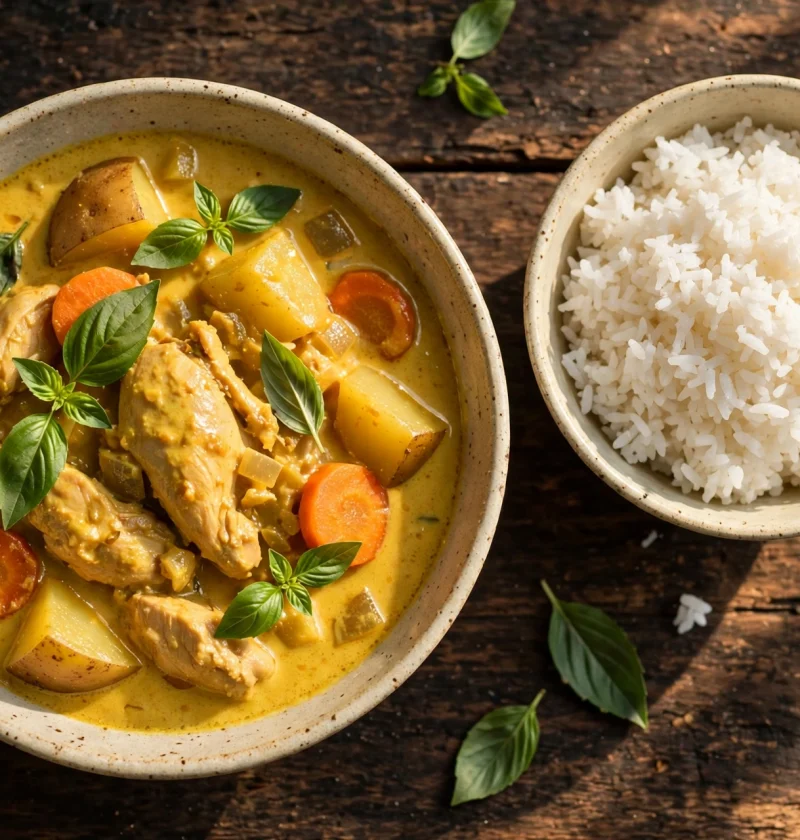
If Thai food ever felt intimidating to cook at home, this Thai yellow chicken curry recipe is the perfect place to start. Of all the classic Thai curries, yellow curry is the mildest and creamiest — tender chicken thighs and chunks of potato simmered in a golden, coconut-rich sauce perfumed with lemongrass, kaffir lime leaves, and fragrant Thai basil. One pan, 30 minutes, and absolutely no hard-to-find technique — just store-bought yellow curry paste and a few fresh aromatics doing all the heavy lifting.
Why You’ll Love This Thai Yellow Chicken Curry
- The mildest Thai curry — sweet, creamy, and gentle on heat, so the whole family (and curry beginners) can enjoy it.
- 30-minute weeknight dinner — everything cooks in one skillet or Dutch oven while the rice steams alongside.
- Hearty and complete — potatoes make it a full meal, not just a sauce; it’s naturally filling.
- Restaurant flavour, grocery-store ingredients — one tin of coconut milk and a tub of yellow curry paste get you 90% of the way there.
Thai Yellow Chicken Curry Ingredients
For the Curry
- 2 tablespoons coconut oil (vegetable oil works too)
- 3 tablespoons Thai yellow curry paste (Mae Ploy or Maesri are excellent)
- 1 can (13.5 oz / 400 ml) full-fat coconut milk
- 1 stalk lemongrass, trimmed and smashed with the back of a knife
- 4 kaffir lime leaves, torn in half (optional but recommended)
- 1 1/2 lbs (700g) boneless, skinless chicken thighs, cut into 1 1/2-inch pieces
- 1 cup low-sodium chicken broth
- 3 medium Yukon Gold potatoes (about 1 lb / 450g), peeled and cut into 1-inch chunks
- 2 medium carrots, cut into 1/2-inch rounds (optional)
- 1 medium yellow onion, cut into wedges
For Seasoning and Finishing
- 2 tablespoons fish sauce, plus more to taste
- 1 tablespoon brown sugar (palm sugar if you have it)
- 1 teaspoon freshly squeezed lime juice
- 1/2 cup Thai basil leaves, plus extra for garnish

How to Make Thai Yellow Chicken Curry
Step 1: Fry the Curry Paste in Coconut Cream
Open the coconut milk without shaking it and spoon off the thick cream that rises to the top (about 1/4 cup) into a large skillet or Dutch oven. Set the remaining milk aside. Heat the coconut oil over medium heat, add the thick coconut cream, then stir in the yellow curry paste. Fry for 2-3 minutes, stirring constantly, until the paste is deeply fragrant and the oil begins to separate and glisten at the edges — this step is what gives the curry its rich, restaurant-level depth.
Step 2: Add the Chicken
Add the chicken pieces to the pan and toss to coat every piece in the fried curry paste. Cook for 3-4 minutes, stirring occasionally, until the outsides are no longer pink. The chicken doesn’t need to cook through yet — it will finish simmering in the sauce.
Step 3: Add Coconut Milk, Broth, and Vegetables
Pour in the remaining coconut milk and the chicken broth, scraping up any paste stuck to the bottom of the pan. Add the smashed lemongrass, torn kaffir lime leaves, potato chunks, carrots, and onion wedges. Stir to combine.
Step 4: Simmer Until Tender
Bring to a gentle boil, then reduce the heat to maintain a steady simmer. Cook uncovered for 12-15 minutes, stirring occasionally, until the potatoes are fork-tender and the chicken reaches 165°F (74°C) internally. The sauce should be creamy and lightly thickened — the potato starch helps it along naturally.
Step 5: Season and Finish
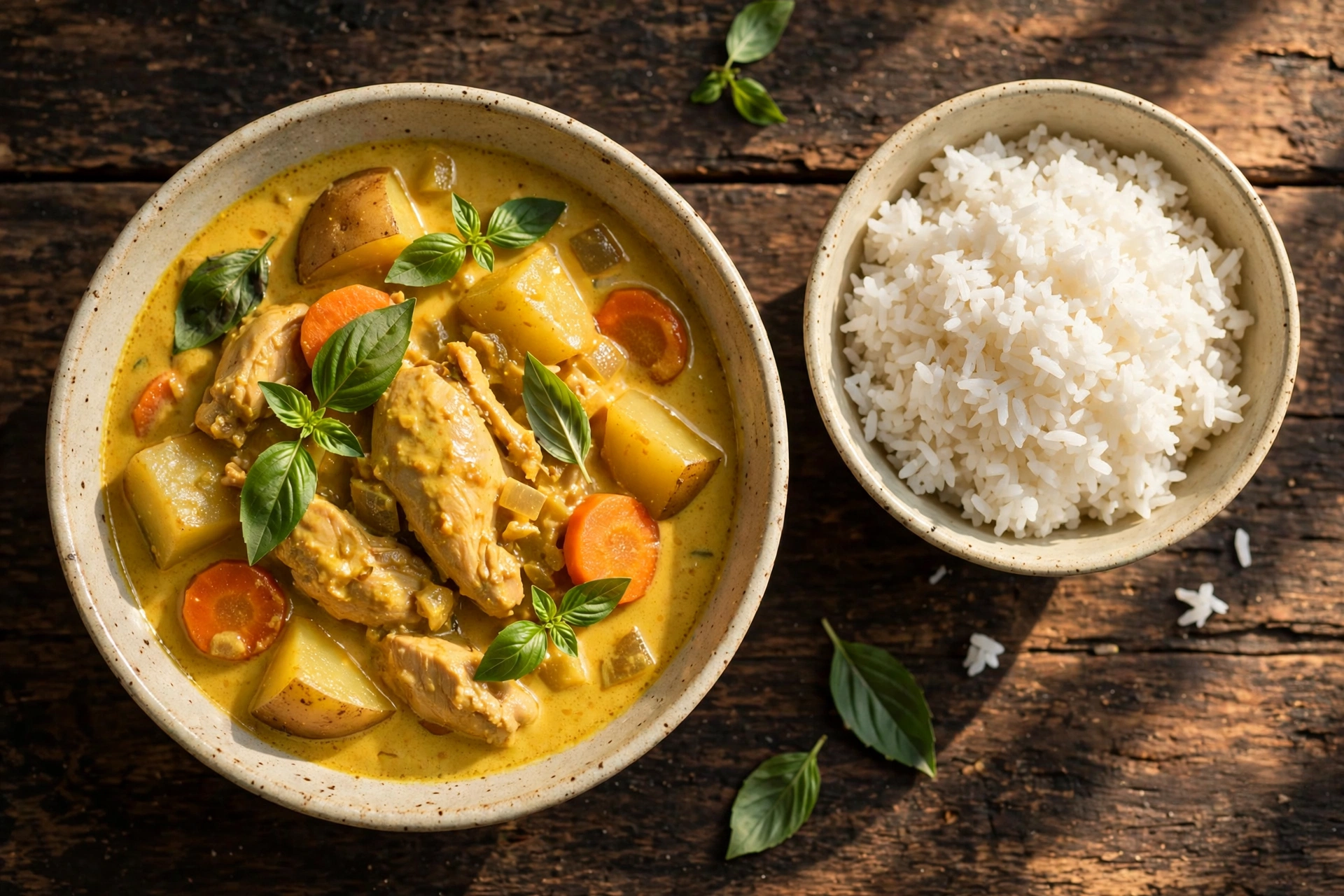
Fish out and discard the lemongrass stalk and kaffir lime leaves. Stir in the fish sauce, brown sugar, and lime juice. Taste and adjust: more fish sauce for saltiness, a pinch more sugar to balance the heat, a squeeze more lime for brightness. Stir in the Thai basil leaves and let them wilt for 30 seconds. Serve hot over steamed jasmine rice, garnished with extra basil.

Yellow Curry vs Red Curry vs Green Curry
Not sure which Thai curry to make? Here’s the quick guide:
- Yellow curry is the mildest and sweetest, flavoured with turmeric (that’s where the golden colour comes from), cumin, and coriander seed. Its Indian-influenced spice profile and potato-heavy make it the most approachable — this recipe.
- Red curry is medium-hot, made from dried red chilies, with a bolder, sharper flavour. Usually made with bamboo shoots or bell peppers rather than potatoes.
- Green curry is the hottest of the three, made from fresh green chilies, with a bright, herbal flavour from lots of Thai basil and green herbs.
If you’re cooking for kids or spice-sensitive eaters, yellow curry is always the safest pick — and you can still add sliced fresh chilies at the table for anyone who wants heat.
Tips for the Best Thai Yellow Chicken Curry
- Fry the paste in coconut cream, don’t just dump it in. Blooming the curry paste in hot fat for 2-3 minutes is the single biggest flavour upgrade — it deepens the spices and removes any raw, tinny taste from the jar.
- Full-fat coconut milk only. Light coconut milk makes a thin, sad sauce. The thick cream from the top of the can is also what you fry the paste in.
- Don’t boil hard. A vigorous boil can make coconut milk split and turn grainy. Keep it at a gentle simmer once everything is in.
- Potatoes should be chunky. 1-inch pieces hold their shape through simmering; cut them smaller and they melt into mush.
- Season in layers. Add the fish sauce, sugar, and lime juice at the END, tasting as you go. Thai cooking is all about balancing salty, sweet, and sour — your paste brand’s saltiness varies, so final seasoning by taste matters more than exact numbers.
- Store-bought paste is completely fine. Homemade yellow curry paste (turmeric, lemongrass, galangal, shallots, dried chilies, shrimp paste) is wonderful, but a quality tub like Mae Ploy gets you 90% of the way with zero effort. Use 3 tablespoons; add a fourth if you like it bolder.
What to Serve with Thai Yellow Chicken Curry
Steamed jasmine rice is the classic and non-negotiable pairing — its floral aroma is made for soaking up coconut curry sauce. For a change, try coconut rice or sticky rice. On the side, a simple cucumber salad (thinly sliced cucumber with rice vinegar, sugar, and a pinch of salt) adds a cool, crunchy contrast, and a wedge of lime brightens each bowl. Prawn crackers or a cold Thai iced tea round out the meal nicely.
Storage and Reheating
- Refrigerator: Store in an airtight container for up to 4 days. Like most curries, it tastes even better the next day as the flavours meld.
- Freezer: Freezes well for up to 3 months. The potatoes may soften slightly on thawing but the flavour stays excellent. Thaw overnight in the fridge.
- Reheating: Warm gently on the stovetop over medium-low heat, stirring occasionally. If the sauce thickened too much, loosen it with a splash of coconut milk or water. Avoid a hard boil so the coconut milk doesn’t split.
More Chicken Recipes You’ll Love
- Butter Chicken Recipe (Restaurant-Style Murgh Makhani at Home)
- Chicken Karahi Recipe – Pakistani Tomato-Ginger Classic
- Tandoori Chicken Recipe (Smoky, Juicy & Restaurant-Style)

Thai Yellow Chicken Curry FAQs
Is Thai yellow curry spicy?
Yellow curry is the mildest of the three main Thai curries. It has gentle warmth from the curry paste rather than real burn, which makes it the best choice for kids and anyone new to Thai food. Want more heat? Add sliced fresh red chilies or a spoonful of chili oil at the table.
Can I use store-bought yellow curry paste?
Absolutely — this recipe is designed for it. A good-quality paste (Mae Ploy or Maesri) gives excellent results. Homemade paste is a nice upgrade if you have the ingredients, but it’s entirely optional.
Can I use chicken breast instead of thighs?
Yes, but thighs are better here. Breast pieces can dry out during the 12-15 minute simmer, while thighs stay juicy and tender. If using breast, cut the pieces a little larger and check for doneness (165°F / 74°C) at the 10-minute mark.
What is the difference between yellow curry paste and curry powder?
They’re quite different. Thai yellow curry paste is a wet blend of fresh aromatics (lemongrass, galangal, shallots, turmeric, dried chilies, shrimp paste) and is the authentic base for this dish. Curry powder is a dry Indian-style spice mix — it will give you a tasty chicken curry, but not a Thai one. Use real Thai yellow curry paste for this recipe.
Why did my coconut milk split or look grainy?
Usually from boiling too hard or using light coconut milk. Keep the curry at a gentle simmer and use full-fat coconut milk. A split sauce is still safe to eat — stir in a splash of fresh coconut milk off the heat and it will come back together.
Thai Yellow Chicken Curry
Ingredients
Equipment
Method
-
- Fry the curry paste in coconut cream: Open the coconut milk without shaking it and spoon off the thick cream that rises to the top into a large skillet or Dutch oven. Heat the coconut oil over medium heat, add the thick coconut cream, then stir in the yellow curry paste. Fry for 2-3 minutes, stirring constantly, until the paste is deeply fragrant and the oil begins to separate.
- Add the chicken: Add the chicken pieces to the pan and toss to coat every piece in the fried curry paste. Cook for 3-4 minutes, stirring occasionally, until the outsides are no longer pink. The chicken doesn't need to cook through yet — it will finish simmering in the sauce.
- Add coconut milk, broth, and vegetables: Pour in the remaining coconut milk and the chicken broth, scraping up any paste stuck to the bottom of the pan. Add the smashed lemongrass, torn kaffir lime leaves, potato chunks, carrots, and onion wedges. Stir to combine.
- Simmer until tender: Bring to a gentle boil, then reduce the heat to maintain a steady simmer. Cook uncovered for 12-15 minutes, stirring occasionally, until the potatoes are fork-tender and the chicken reaches 165°F internally. The sauce should be creamy and lightly thickened.
- Season and finish: Fish out and discard the lemongrass stalk and kaffir lime leaves. Stir in the fish sauce, brown sugar, and lime juice. Taste and adjust: more fish sauce for saltiness, a pinch more sugar to balance the heat, a squeeze more lime for brightness. Stir in the Thai basil leaves and let them wilt for 30 seconds. Serve hot over steamed jasmine rice, garnished with extra basil.